

When it comes to outdoor equipment, no piece of gear is quite as versatile as the tarp. On the surface, they may seem like just a basic sheet of fabric. But understanding their different uses and the many distinct ways they’re designed for these specific uses reveals their true versatility. Between their vast scope of materials, construction features, and sizes, there truly is a tarp for every scenario you could dream of.
Table Of Contents
- Types of Tarps
- Canvas Tarps
- Poly Tarps
- Vinyl Tarps
- Mesh Tarps
- Features To Look for in a Tarp
- Fabric Coatings
- Weight and Thickness
- Shape and Size
- Construction Details
- Grommets and Tie-outs
- Color
- 7 Ways To Use a Tarp When Camping
- Protect Your Vehicle When Packing
- Build a Tarp Shelter
- Enhance Your Tent
- Protect Your Gear Stored Outdoors
- Make a Hammock
- Transport Heavy Items Around Camp
- Collect Rainwater
- How to Maintain Your Tarps
- Step 1: Pick the Right Tarp for Your Needs
- Step 2: Use and Secure It Correctly
- Step 3: Clean It After Every Use
- Step 4: Inspect It for Any Damage
- Step 5: Pack It and Store It Away Properly
- Final Thoughts
But how do you know which tarp is right for you and your needs? Strap in for a deep dive into the wonderful world of tarps! Discover the different types of tarps, the range of materials they’re made of, the features to look for when buying one, and how to best maintain your new purchase. Plus, learn 6 ways to use a tarp for one of the most popular outdoor activities: camping! Let’s get started.
Types of Tarps
There are countless types of tarps available on the market, many of which are made for distinct uses. Industrial tarps are used in places like construction sites, agricultural settings, and other commercial work environments. Sports tarps are intended for covering a range of sports settings, from baseball and football fields to tennis courts, sidelines, and stadium seats. Truck tarps are primarily employed for protecting any goods found in the back of trucks during transport, or for protecting the beds of trucks. Additionally, there’s a host of specialty tarps that are designed for specific use cases. These can be anything from bee-hauling and hay tarps to lumber and demolition tarps.
Aside from these use-based tarps, consumers can also shop for tarps by material. These tarps are more general and can be effective for a wide range of uses. Below are the 4 most common materials tarps are made of.
Canvas Tarps
Canvas tarps are typically made from heavy-duty duck cotton. The primary benefit of canvas tarps is their breathability thanks to the nature of cotton materials. Breathability results in minimal condensation, which makes them popular among campers where this is a key consideration. These are also heavier in weight than many of the synthetic material alternatives.
Poly Tarps
Made from the synthetic material polyethylene, poly tarps are both lightweight and water resistant. However, some high-quality poly tarps are constructed to be heavier-duty than the typical poly tarps on the market. Opt for this material when you’re using your tarp as an outdoor covering to protect items from the elements.
Vinyl Tarps
Vinyl tarps offer many of the same benefits as poly tarps like water resistance, but are often superior when it comes to durability. This material is intended for heavy-duty use, including industrial and commercial applications.
Mesh Tarps
The lightest weight option, mesh tarps are typically made from synthetic materials like nylon and polyester. Additionally, thanks to the construction of mesh fabrics, these tarps offer unmatched ventilation. Choose a mesh tarp for horticulture purposes, or if you’re looking to create shade outdoors.
Features To Look for in a Tarp
Like any piece of gear, tarps come with a range of different features that you should consider before purchasing. Here are a few to keep in mind when picking out a new tarp!
Fabric Coatings
The best tarps on the market will be finished with a fabric coating to help protect them from a variety of elements. This includes water-repellent, mold and mildew-resistant, UV-resistant, and rot-proof treatments. While many of these extra coatings, aside from water-repellence, aren’t necessary for the function of your tarp, treatments go a long way in ensuring longevity.
Treatments and coatings also take basic fabrics and turn them into modern, high-performing materials. For example, old-school cotton canvas would normally be a nightmare in rainy, wet conditions. By choosing a cotton canvas tarp that’s been treated with a water-repellent coating, you get the heavy-duty durability of the canvas without compromising the water-repellent quality seen in most synthetic materials.
Weight and Thickness
Tarps range from ultra-lightweight to super heavy-duty. The weight and thickness you’ll want will depend heavily on what you’re using your tarp for. If you’re using your tarp as a groundsheet for your tent on a backpacking trip, you’ll likely prefer an ultra-light option that’s easy to travel with. If you’re using your tarp to protect expensive equipment from harsh weather outdoors, a super heavy-duty style will be the better choice. While most people don’t need to stray from a standard weight and thickness, it’s important to consider how you’re using your tarp and what external elements it’ll be exposed to when in use.
Shape and Size
Again, the shape and size of your tarp will largely be informed by what you’re using it for. Glampers pitching a circular bell tent will need to invest in a circular tarp that matches the shape and size of their tent, for example. Luckily, tarps come in virtually every size under the sun, so it shouldn’t be too difficult to secure a tarp that matches the dimensions you need. As for the shape of tarps, squares, and rectangles are the most common, but you’ll also find circular and hexagonal shapes. Before you make your purchase, get out a measuring tape and jot down the dimensions of whatever it is you’re using your tarp for.
Construction Details
For basic, economical tarps, you usually won’t find more than the necessary stitching along the tarp’s perimeter. On high-quality tarps, however, there are several construction details to look out for. Heavy-duty tarps should have double-stitched hems and seams for reinforcement. This extra construction detail goes a long way in making your tarp durable in harsh conditions.
Super heavy-duty tarps take it to the next level, with some offering rope-reinforced hems and plastic bars on each corner for maximum durability. If you’re using your tarp for agricultural, construction, industrial, or commercial purposes, you’ll want to opt for these top-of-line construction details.
Grommets and Tie-outs
Some tarps feature grommets, some have tie-outs, some have both, and some have none of these. Grommets and tie-outs give users a place to attach ropes, cords, and other items used to hang or secure your tarp.
Grommets are usually made of metal, but sometimes plastic. They give the tarp strength and structure, as well as a path for ropes and cords to thread through, protecting the fabric from unnecessary wear and tear. If you opt for a tarp with grommets, look for ones that are rust-proof stainless steel to ensure their longevity.
Tie-outs are generally a loop of thick, webbed fabric securely stitched to a tarp in an X-box pattern. The idea with this design is that much of the wear and tear the tarp will experience will be concentrated on these tie-outs, which are much easier to repair and cheaper to replace than the entire tarp.
There are pros and cons to both grommets and tie-outs, and it ultimately comes down to how you plan to use your tarp and your personal preferences.
Some tarps have no grommets or tie-outs. Opt for this style if you don’t plan to tie or secure your tarp at all, for example, if you’re using your tarp as a layer of protection between two items.
Color
Compared to the other features on this list, color should be the least important factor in your choice, though you should still consider it! Ask yourself: do I want my tarp to match the rest of my equipment, do I want it to camouflage into its surroundings, or do I want it to be easy to spot among all my other gear? If it’s the latter, opt for a bright, neon-colored tarp that’ll stand out next to more neutral items.
Consider also how color plays a role in reflecting and absorbing sunlight. Darker colors like black, dark green and burgundy will absorb more sunlight and emit more heat. Whatever you store under or place on top of it will absorb some of this heat, too. On the other hand, light-colored tarps like tan, cream, and silver will reflect more sunlight, resulting in better UV-resistance.
7 Ways To Use a Tarp When Camping
A campsite is just one of the countless settings where tarps are an essential piece of gear. If you’ve ever gone camping, there’s a good chance you’ve already used a tarp, whether it was to protect your truck bed when packing up your gear or to protect the bottom of your tent when pitched. For the readers who have a camping trip in the books, try out one (or all!) of the 7 following ways to use a tarp at a campsite!
Protect Your Vehicle When Packing
Instead of packing your tarps away until you get to camp, consider putting them to good use. There’s a lot of gear involved in camping, from your tent and camping chairs to your kitchen supplies and personal belongings. Before throwing your campsite items into the trunk of your car or the bed of your truck, lay down a few tarps. This will create a barrier between your vehicle’s interior and your gear, helping to protect it from potential damage and inevitable dirt and debris.
Build a Tarp Shelter
If you don’t already have a camping tent, or you just want to try something new, use a tarp to build your shelter. From the A-frame design to the lean-to method, there are numerous ways to create a functional outdoor shelter out of a tarp, each serving different purposes depending on your needs. No matter what design you choose, you’ll benefit from the versatility, convenience, and minimalism this type of camping shelter offers. It may not be for everyone, but you won’t know until you try it yourself!
Enhance Your Tent
Maybe you already have a heavy-duty tent and a tarp shelter isn’t necessary on your next trip. In this case, use your tarps to enhance the performance of your shelter. All tent users will need their ground tarps, also known as groundsheets, at a minimum. No matter what kind of tent you have, this piece of gear is essential to protect the bottom of your shelter and keep the inside as dry as possible.
If you forgot your rainfly sheet, or if you’re just looking for extra protection, tarps can be used to protect the top of your tent, too, especially when it comes to precipitation.
Another great use of a tarp is to create extra shade around your tent or campsite. Whether you hang and stake it directly off your tent to fashion a canopy, or construct it in an entirely different area of camp, tarps are the perfect piece of equipment to produce shade in a pinch.
Protect Your Gear Stored Outdoors
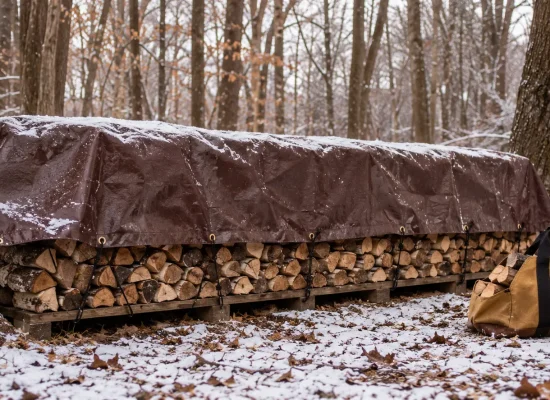
Unless you’re traveling with a huge tent, there’s a good chance that not all of your camping gear will make it inside your shelter. While cars are always a good place to store extra gear, you still may want your equipment in a more accessible place. That’s where tarps come in handy, yet again! Whatever you plan to store outside will be vulnerable to the elements, whether it’s rain, snow, wind, or harsh UV rays. By covering your gear with a tarp, they’ll be better protected from the weather than if they’re just out in the open. Equipment best suited for this type of storage are large items like bicycles, fishing gear, and firewood.
Make a Hammock
Building an entire shelter out of a tarp may seem a bit intimidating, but rigging a hammock is truly a piece of cake. There are a few ways to go about this, but for a simple method, grab some paracord and your tarp of choice (ideally one with tie-outs) to get started. Once you’re at camp, scout out two sturdy trees that are a reasonable distance apart for a hammock. Then, secure your paracord to your tarp, wrap the line around the first tree, and secure the end. Repeat on the other side, and voila, you have a functional new hammock to enjoy at camp!
Transport Heavy Items Around Camp
Have something heavy at camp that needs to be brought from point A to point B? In a lot of cases, this item is a bunch of firewood, but really this method of transportation could be used for anything you might need it for. Grab your heavy-duty tarp and place whatever it is you want to move on top. Simply drag the tarp from one corner to wherever you need to go. It’s quite a simple solution, but it’s guaranteed to lift some weight off your shoulders.
Collect Rainwater
Rainwater is often an underrated resource at camp. It can be used for a variety of things, from washing dishes and cleaning dirty clothes to bathing yourself. In some cases, you can even drink it after treating it, but that should be a last resort. Using a tarp to collect water limits the amount of water you’ll need to bring to camp, making your load lighter and more manageable. Plus, it’s an incredibly sustainable practice!
To collect rainwater with a tarp, make sure you use a poly or vinyl tarp that’s 100% water resistant. There are multiple ways to fashion a tarp for this use, from tying up all four corners to tying up just one or two. Either way, make sure you bring along a large enough bucket to transfer your water to after collection.
How to Maintain Your Tarps
Just like any piece of equipment, you want your tarps to last as long as possible. One of the best ways to ensure a tarp’s longevity is by looking after and maintaining it. Follow these 5 steps as a guide:
Step 1: Pick the Right Tarp for Your Needs
The first step in maintaining your tarp is to pick the right tarp in the first place. As we’ve covered, tarps are designed for a range of purposes. If you use a tarp for something it wasn’t intended for, like dragging a mesh tarp along the ground to transport a heavy piece of camping equipment, there’s a high likelihood it won’t withstand what you put it through. At the very least, you’ll wear it down much quicker than it would wear down otherwise. Use your common sense to make sure you choose the right tarp for the job at hand.
Step 2: Use and Secure It Correctly
It’s also important that your tarp is being used properly. That means if you’re tying or securing it somewhere, take the time to do it correctly to avoid it becoming unfastened. A properly secured tarp will face much less wear and tear from the elements compared to a tarp that’s poorly installed, flapping around in the wind and rain, hitting trees, and other elements that may damage it.
Step 3: Clean It After Every Use
Most of your tarp maintenance will come in after you’re done using it. Make sure you’re cleaning it after every use. This will ensure it’s free of any debris before you pack it up and store it away. Skipping the cleaning step could result in natural scraps like twigs and rocks getting folded in with your tarp, causing abrasion and other types of wear and tear over time.
While it’s not the most fun part of owning a tarp, it’s an important part of taking care of your gear. How you clean your tarp will depend heavily on the material it’s made of. Generally, you can use a sponge, mild soap, water, and a clean microfiber towel. Always avoid abrasive cleaning solutions and brushes unless otherwise specified by the tarp’s manufacturer. If your tarp has grommets or other smaller design details, use a toothbrush to get into these crevices successfully.
Step 4: Inspect It for Any Damage
After your tarp is clean, spend some time inspecting it for rips, tears, or any other damage that might have occurred during its use. Fixing these immediately and before your next use of the tarp will make sure the damage doesn’t get any worse or completely irreparable. The size, severity, and type of damage, will determine how you’ll need to fix it. Smaller rips and tears can often be mended with tarp tape or other adhesives like tarp-specific glue. For larger damage, patching the problem area may be necessary. Most repairs can easily be done at home, but you can also take your tarps to an expert for a professional fix.
Step 5: Pack It and Store It Away Properly
Maybe the most important factor in the longevity of your tarp, next to repairing damage immediately, is packing and storing it away properly. Make sure your tarp is 100% clean and fully dry before packing it up. Even the slightest amount of moisture can cause mold, mildew, and eventually, rot. When picking a place to store it, choose a dark, dry space that’s free of humidity, direct sunlight, and excess heat. Keeping your tarps in an air-tight storage bin is your best bet to keep them clean and dry when not in use, and ultimately, in good condition for years to come.
Final Thoughts
Although they may look like a simple fabric covering, tarps are an incredibly versatile piece of gear designed in a variety of ways and used for countless ingenious purposes. Many tarps are constructed for very specific purposes, from industrial uses to sporting applications. Others are intended for more general use cases, where the material of the tarp is the most important consideration. Outside of materials, shoppers should look for a few key features, including fabric coatings, weight and thickness, shape and size, construction details, grommets and tie-outs, and color. By understanding the range of features available, you’ll be well-equipped to pick the right tarp for your unique needs.
Whether you’re building a tarp shelter at a beautiful campsite or fashioning a hammock in your backyard, there’s a tarp out there that will serve you well. With the right tarp in hand and a thorough understanding of how to maintain it, you’ll be ready to enjoy its versatility for years to come.





No Comment! Be the first one.