

Four Season Tents
Whether you are expanding your adventure capabilities for winter camping or high-altitude backpacking subject to volatile weather changes, a high-quality 4 season tent is crucial for ensuring safety, comfort, and durability. Unlike typical 3-season tents, 4-season tents are designed to withstand harsh weather conditions such as heavy snow, high winds, and sub-zero temperatures. Here’s a comprehensive guide to some key features to consider when selecting a 4-season tent.
Table Of Contents
- Four Season Tents
- Ventilation & Temperature Control
- Adjustable Vents
- Mesh Panels
- Ventilation Design
- Size
- Headroom
- Storage Space
- Weight and Packability
- Weather Resistance
- Waterproof Coatings
- Sealed Seams
- Doors
- Durability
- Fabric
- Infrastructure
- Stability
- Setup Simplicity
- Freestanding Design
- Stove Jack
- Final Thoughts
Ventilation & Temperature Control
Even though we’re talking about 4 season tents that should stand up to winter weather, it’s still important to make sure that your tent is versatile enough to keep you comfortable during the warmer months, too.
Adjustable Vents
Adjustable vents allow you to control the airflow inside the tent, reducing stuffiness from condensation and maximizing comfort. Look for tents that not only feature vents that can be opened or closed based on weather conditions and your needs, but also are strategically placed to promote cross-ventilation. High vents allow warm, moist air to rise and escape, while low vents pull in cool, fresh air from outside.
Mesh Panels
Mesh panels in the tent body or rainfly serve several purposes, providing ventilation while also keeping annoying insects out. This feature is particularly useful in warmer seasons or when camping in areas with mosquitoes or other nuisance bugs. Tents with mesh panels also enhance breathability inside the tent by allowing air to circulate freely.
Ventilation Design
Vents with adjustable covers or flaps can be opened to varying degrees to control the amount of airflow and prevent rain from entering when the vents are open.
Size
When choosing a four-season tent, keep in mind that the amount of gear you bring along will likely change significantly with the seasons. In the summer, you might need to hang wet towels and swimsuits from a day in the water. In the winter, you will likely have a stove, thick sleeping bags, blankets, bulky outer clothing layers, and large clunky boots to contend with. Choosing a tent with enough space to house all of your gear is a major consideration when shopping for a dwelling to accompany you year-round.
Headroom
Adequate headroom is a feature you should definitely seek out when shopping for your next four-season tent as it allows campers to move around comfortably and perform tasks like dressing or cooking inside the tent. What’s more, taller ceilings mean more room for gear lofts and other organizational methods for keeping the inside of your tent free and clear of clutter.
A wall tent is a great choice for maximal headroom, as it features a more vertical design as opposed to a dome shape which requires crouching near the corners. Wall tents are made of four vertical walls and an A-frame roof, meaning there will be no more crouching once you’ve reached the corners of your tent.
Storage Space
Multiple vestibules offer additional storage space for winter gear, boots, and other bulky equipment you’ll probably want to carry along when camping in cooler weather. Having a bit of extra space helps keep the interior of your four-season tent organized and free of clutter.
Weight and Packability
A tent that compresses into a small pack size is a key feature to take into account when looking for a four season tent, especially if you plan on using your tent for backpacking, hunting, or trekking to high altitudes. Look for tents that break down compactly and fit easily into a backpack or travel bag.
Weather Resistance
Look for a 4 season tent that offers a full-coverage rainfly. Such a rainfly extends from the top of your tent all the way to the ground, keeping the tent and its contents dry and offering an extra layer of insulation. Some rain flies even feature an awning, overhang, or extended skirt which helps in the wintertime against strong winds which can send snow right underneath a normal rain fly.
Waterproof Coatings
For 4-season tents, seek tents made of fabrics with high hydrostatic head ratings to ensure they can handle heavy precipitation. Some tent materials are also coated in water-repellent treatments that help water bead and roll off the tent’s exterior rather than soaking in. Often, such coatings are silicone-based.
Sealed Seams
Tents that feature factory-sealed seams are pre-treated with waterproof sealant tape during the manufacturing process. This offers reliable protection against leakage of rain or snow through the entrance/exit or windows of your tent. You can always DIY seam-seal, or reinforce sealant if necessary by applying high-quality seam sealant to all stitched areas paying special attention to doors and corners.
Doors
Multiple doors provide convenient access to the tent from all sides, reducing the need to climb over other campers, track in mud or snow from excessive in and out trips, and improve accessibility. Separate entrances can be used for different functions, such as storing gear at one end or accessing the tent without disturbing others at the other.
Easy-access zippers, such as those with large pulls and smooth designs make it simpler to open and close tent exits even in icy or wet conditions. Large, easy-access zippers are also much easier to operate with gloves or mittens than normal zippers.
Doors are a small consideration when making the best decision for your next four-season tent, more a convenience than a seasonal necessity. While you shop for optimized livability no matter the season, remember that your tiniest preferences also matter! Camping should be a relaxing, enjoyable activity, so choosing a tent according to your needs extends to the tiniest of details.
Durability
Fabric
The “denier rating” of a fabric measures its thickness and strength. For 4-season tents, high-denier fabrics such as 40D (denier) or 70D are your best bet. These fabrics are more resistant to tears and abrasion, ensuring the tent can handle rough wintery conditions or rocky terrains.
Whichever fabric you choose for your four-season tent (we recommend canvas for its versatility and toughness) should be coated with a waterproof layer, such as polyurethane (PU) or silicone, to enhance its water resistance.
Infrastructure
When it comes to durable infrastructure, aluminum poles are favored for their strength and lightweight properties. They can withstand the stress of snow loads and high winds better than alternatives like fiberglass or plastic.
This is a painfully obvious statement, but bear with us– the design of the poles, including their diameter and thickness, greatly impacts their strength. The larger the diameter, the more resistant to bending or breaking that pole may be.
While strength is crucial, flexibility is also important. Poles should be made of materials flexible enough to bend without breaking, which enables them to absorb high wind and snow loads without weakening for years. Shock-corded poles are something you could keep in mind when searching for your ideal tent, as they are connected with elastic cords inside the pole segments, making them easier to assemble and reducing the risk of losing or misplacing parts.
Stability
Guy lines are essential for stabilizing the tent during high winds and snow loads. Look for 4 season tents with adjustable guy lines that can be tightened or loosened based on weather conditions.
Reinforced anchor points ensure that the tent remains securely in place, even in adverse weather conditions. When searching for 4 season tents, ensure that you choose one with strong, reinforced anchor points for pegs or stakes. For preparation to camp on snow or ice, purchase specialized snow stakes or anchors to ensure a secure hold.
Setup Simplicity
Tents with quick-clip or hook-and-loop setup systems allow for faster attachment of the tent body to the frame. This design minimizes the need for threading poles through sleeves, making setup quicker and easier.
Quick-clip systems also securely hold the tent in place, preventing it from shifting or collapsing once assembled.
Freestanding Design
Freestanding tents are also great options for four-season tent selection as they can be set up without the need for staking, which is useful on rocky or frozen ground surfaces. This design allows for greater flexibility in choosing a campsite–helpful when it’s freezing out– and simplifies the setup process.
Stove Jack
Tent stove jacks are an invaluable feature for 4-season tents, especially for those venturing into extreme weather conditions or planning an extended winter camping trip.
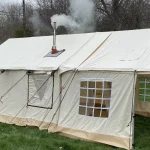
Tent stove jacks enable you to safely utilize a tent stove or wood stove by venting the pipe of a tent stove or wood stove through the tent’s fabric. This capability helps maintain livable warmth even in sub-zero temperatures. Stove jacks also help reduce the buildup of fumes inside the tent, preventing moisture and condensation buildup leading to mold and mildew, and significantly reducing the risk of carbon monoxide poisoning from indoor stove use.
The ability to use a stove with a tent stove jack allows you to effectively heat your 4 season tent in wintery conditions, while in milder seasons, the stove can be conveniently used for cooking or drying gear.
Final Thoughts
We’ve compiled this list of features to make choosing a 4-season tent a much less daunting task. Finding a tent that offers exceptional durability, comfort, and functionality for your year-round outdoor adventures is a complete game changer for the winter blues. Whether you’re facing sunny and 75 summers, snowy, craggy mountains, windy highlands, or rainy lowlands, the right 4-season tent will provide reliable shelter for years to come.


No Comment! Be the first one.