


For a lot of outdoor enthusiasts camping began as a way to minimize living to the bare essential items and rough it in the great outdoors. For some, it was about unplugging from the digital world and curbing the habit of screens being the main thing we interact with.
Table Of Contents
Immersing in the great outdoors is not without its challenges. But it is possible to do it with the least hassle so you can have an authentic and pleasant experience. This is where modern camping gear comes in.
As you reconnect with nature you can replenish with good food, sleep comfortably under a reliable shelter, and use safety equipment so your camping experience continues without accidents or misfortunes. Check out the curated items that have made it to our camping gear list.
Tent Stove
Most people have seen campers cooking over a campfire. Modern camping no longer witnesses this practice. You can easily find a portable tent stove in some of the best outdoor stores. These are placed in kits so you can assemble them after you have set up camp.
The most common types of tent stoves are fueled by wood. Tent stoves can be placed in front of your tent, and if your tent has a stove jack, can be fixed inside. An outdoor propane stove is super handy when you have chosen a spot at a campsite with fire restrictions. Sometimes campsites don’t have fire rings, or the weather gets too windy to sustain a proper flame.
A Tent stove with a single burner is usually enough for your camping trip. Look up single-pot recipes to guide you.
Smart Cooler
Look for good quality coolers that will keep ice cold for at least 5 solid days. With this, you can pre-plan meals and place the meat ingredients inside the cooler. It will help you save space when packing as you won’t have to pack tinned food separately. Take this up a notch with a smart cooler.
A smart cooler is a game changer. You can connect these to an app on your phone that will alert you of temperature changes or if the cooler lid is open for over 3 minutes to help you conserve energy and maintain temperature. If you are camping with children they may fidget with the appliance. It is good to be notified if it gets accidentally turned off or amped up.
What is more, some coolers come with additional features for outdoor enthusiasts like a portable battery pack or an external cooling fan. You can place this inside your tent to cool the interior during summer. Check the insulation rating of the model you like before purchasing it.
First Aid Kit
Injuries do happen when you are camping. We are not saying that every camping trip accounts for a couple of accidents but when you are exploring the outdoors cuts, scratches, and bruises are a common occurrence.
A well-stocked kit should include essentials such as antiseptic wipes, gauze, adhesive bandages, OTC pain reliever, scissors, disposable gloves, and an emergency blanket. Anti-histamine meds are optional but a good idea if you are taking children on the trip with you who you don’t want to find out is allergic to certain plants in the middle of your trip.
A must-have item in your first aid kit should be an insect repellent. A spray-on repellent should be part of your morning routine before you exit your tent even if the campsite doesn’t look like it has a critter problem. Before you leave for your trip don’t forget to check this kit and restock anything that has run out.
Fire Pit
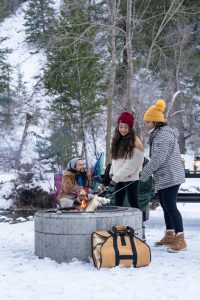
If your campsite has fire restrictions you may be allowed to use a propane fire pit. As a camping enthusiast, the camping experience can feel empty without a campfire at night. Propane pits run on fuel so they are easier to control than wooden logs. Logs have to be arranged in a strategic style so that they catch and maintain the fire. The only problem with a propane pit is that it’s big and you have to carry it with the rest of your camping gear to the site when you are trying to be minimal.
However, the benefits outweigh the drawbacks. There is no soot to clean up and there isn’t that lingering smell of smoke on your clothes or your hair. The most crucial advantage of this fire pit is that it is easy to put out at the end of the night and therefore poses no danger of stray embers turning into a giant fire overnight.
Tarp
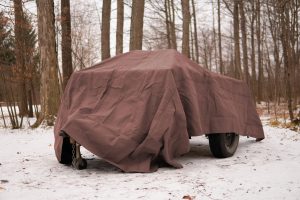
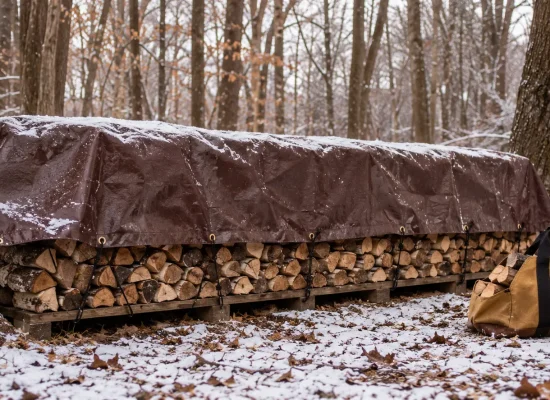
A tarp may be the most versatile out of all camping gear. You can use a tarp as a tent rain cover and tether it above your tent. The same technique can be used when it snows so that snow catches and melts on the tarp instead of the roof of your tent.
You can also use the tarp as a footprint. Tents like wall tents do not have a floor as part of the assembly kit. A waterproof tarp will serve as an excellent barrier between the ground and the interior of the tent. Most campers use a tarp regardless of a sewn-in tent floor. This is so that the tent floor doesn’t get damaged from the rugged ground.
A tarp can also be used as a picnic blanket, a game mat, and to cover any items that you may have outside your tent.
Solar Lanterns
Solar lanterns can save you when you have trouble hooking up all your lighting equipment to a limited number of electrical outlets. If this is your first time camping at a site, it is unlikely you would know the placement of the electrical outlet and how much power is allotted to each tent.
On top of that in case of a power outage or a faulty generator; your tent will have plenty of illumination thanks to your solar-powered lanterns.
Sleeping Pad
Sleeping pads go under your sleeping bag as a barrier between your bed and the cold hard ground. During the day you can use them as mats to sit on the ground. These pads are designed to have insulating qualities above all else. You can find each pad would have an R-value rating which shows how well a particular pad can perform in different temperatures.
These are very easy to carry and travel with. Sleeping pads are thinner than sleeping bags and can be rolled up and packed in your canvas duffel bag.
Dry Bag
A reliable dry bag serves multiple purposes during a camping trip and is therefore essential. You can use a dry bag to store food items and then hang the bag from a considerable height in a tree so that bears can’t get into your stash.
Dry bags are also a great help if you are camping at a waterfront property. Instead of handing your valuables and cellphones to a designated person who won’t go into the water, place all your items in a secure dry bag. You can swim, kayak, and do other water-based activities without worrying about your things.
Log Carrier
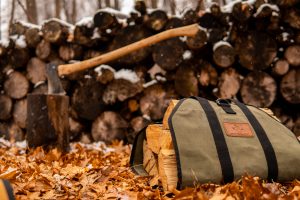
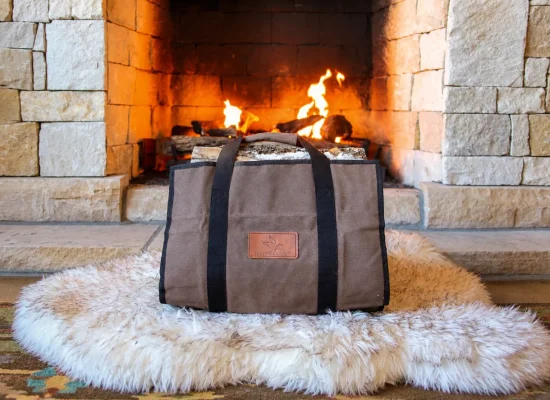
With a tent stove, you have to have a steady supply of wood logs. Call your campsite in advance to see if they offer their customers logs on the campgrounds. They might do this for a fee. You will need a log carrier to pack the heavy logs you need and carry them across the campsite to your tent. Without a log carrier, you may end up making multiple trips. And you can easily get wood splinters in your hands and arms.
Portable Coffee Maker
Not many of us can start the day without a cup of coffee. Instead of packing your coffee maker, get a portable coffee maker like the Aeropress. If you are using a tent stove, pack a Moka pot for your morning brew. This way you can save space, and still be able to enjoy a delicious cup of java.
Be Smart When Shopping
The items listed above are important. That being said, be smart when you are buying the things that you don’t already have. Look for slightly used second-hand items wherever you can. For example, you have a good chance of finding coolers for sale that have been used a couple of times only. Items like sleeping pads and sleeping bags should be bought brand new.


No Comment! Be the first one.