
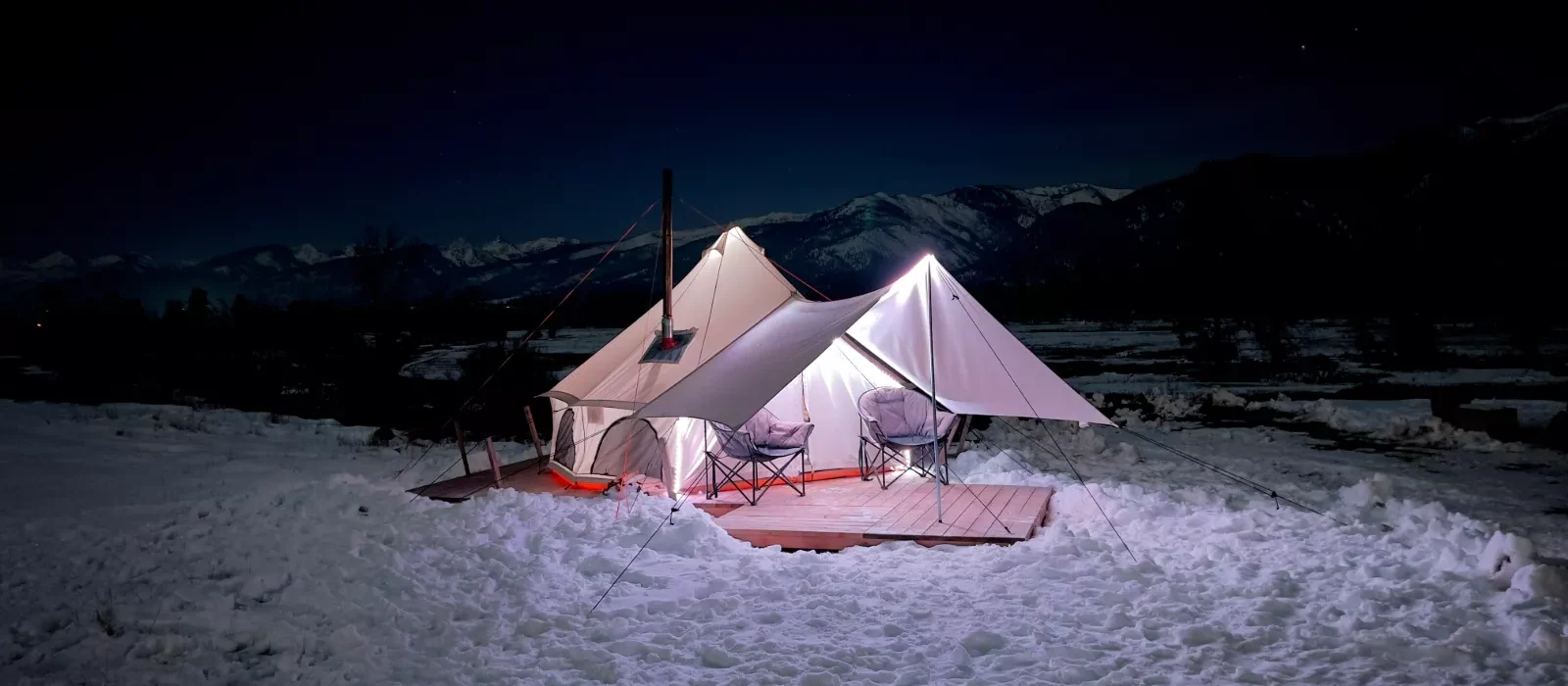
A reliable shelter is the center of every successful campsite, whether you’re on a glamping getaway in a luxury yurt tent or going solo in the backcountry with a lightweight dome tent. No matter your setup, tent accessories can be a great way to enhance your shelter’s functionality and overall comfort. Today, we’ll be exploring two popular accessories campers commonly add to their shelters: tent porches and awnings. While they seem similar at first glance, it’s important to understand their key differences in order to make the right choice for your camping setup. Read on to discover what makes a tent porch different from an awning, and uncover the pros and cons of each. Then, learn how to pick the perfect one for your next trip. Let’s get right into it!
Table Of Contents
What Is a Tent Porch?
A tent porch is a detachable extension added to the front entrance of a camping tent that mimics a traditional front porch. This practical tent accessory typically consists of a roof and 2 side walls, although exact designs vary from brand to brand. Just like a porch found on any hard-sided building, a tent porch adds a space that’s partly exposed to the outdoors, making it a great place for a variety of campsite tasks and activities. Tent porches are most commonly found on wall tents, cabin tents, and dome tents, but variations exist for several different tent styles on the market.
The Advantages
Adding a tent porch instantly increases the square footage of your shelter, giving you more space to hang out, cook, store camping gear, and more. Since a porch is semi-enclosed, it also provides campers a place to enjoy the outdoors while staying well protected from the elements.
When compared to a tent awning, a porch offers weather protection from more angles, thanks to its side walls. These walls also give a tent porch more stability in harsh weather conditions, making it better equipped to handle strong winds, heavy rain, and snow.
Additionally, porches create a greater sense of privacy for campers, which is a huge benefit for anyone pitching their tent at a busy campground. Plus, the separate space a porch creates gives families and group campers distinct places to hang out apart from each other when necessary.
If aesthetics are important to you, it’s undeniable that a tent porch makes any tent more stylish, too!
The Disadvantages
Although tent porches add a ton of value to a campsite, there are a few disadvantages to this popular accessory worth considering. Any additional piece of equipment you add to your tent – porches included – will complicate your setup and take-down, adding more time and steps to the process. Because of their side walls, you can also expect them to be heavier than awnings and other tent accessories. These side walls also require more materials and labor to make compared to awnings, often making them the more expensive option.
Campers love tent porches for the extra space they provide, but it’s also important to note that the square footage is limited when compared to an awning. An awning’s open sides give you the option to extend your setup out from under the cover of the roof, while the side walls of a tent porch limit you to working with the area enclosed in the porch. This is usually not a huge deal for most campers, but vital to point out when comparing these two accessories.
What Is a Tent Awning?
A tent awning is also an extension added to the front entrance of a camping tent, offering a covered space for campers to use for a variety of tasks and activities. Unlike a tent porch, an awning features only a roof – no side walls – supported by durable poles and guy lines. This simple yet key difference creates several distinct advantages and disadvantages when compared to tent porches. Awnings are usually detachable and can be used on most tent styles, though some tent designs feature built-in awnings for unmatched convenience in the outdoors.
The Advantages
Similar to tent porches, the main advantage of tent awnings is the additional square footage they provide. Hang out, store your gear, or even cook a meal under the comfortable protection of a tent awning.
Thanks to the lack of side walls, tent awnings provide unlimited space from side to side for campers to spread out as they need. The absence of sidewalls also greatly reduces the weight of awnings, making them lighter and easier to transport than the alternative. Further, the open-air design of tent awnings provides ample ventilation – a huge advantage when camping in hot or humid environments.
On a similar note, the simplicity of a tent awning requires less fabric and labor than porches, contributing to their more affordable costs when compared to more complex tent accessories.
The Disadvantages
Just like a tent porch, adding a tent awning makes your shelter more complex and thus adds more time to both the setup and take-down process. While awnings are generally lighter in weight, they’re still extra equipment to carry to and from camp.
Not having side walls provides campers with several practical benefits, but there are also a few downsides that are important to note, too. First, only having a roof with no walls will naturally leave you and your gear with less protection in harsh weather. Similarly, tent awnings are typically less stable than porches with side walls, especially when it comes to heavy winds and snow.
How to Choose the Right Tent Accessory for You
Tent porches and awnings are both awesome additions to any campsite, but there are applications where one excels over the other. Between its superior ventilation and open-air design, tent awnings are usually best suited for warm-weather camping. Campers can enjoy the plentiful shade cast by a tent awning while feeling the full breeze thanks to the lack of an awning’s side walls. On the contrary, the unbeatable protection offered by a tent porch’s side walls makes it an ideal accessory for winter and cold-weather adventures.
For those campers who believe every ounce counts, the lighter weight of a tent awning may be more appealing than the hefty nature of a durable tent porch. On the flip side, however, other campers will happily embrace the extra weight in exchange for the sturdiness a tent porch provides.
If price is a concern, a tent awning is a more affordable introduction into the world of luxury tent accessories, while porches are a bit more of an investment.
The Bottom Line
A camping tent is the center of every successful campsite, no matter the kind of adventure you’re embarking on. Tent accessories are the best way to improve the functionality and comfort of this essential piece of camping equipment, whether you’re looking to improve your tent’s square footage or enhance its aesthetic appeal. Tent porches and awnings are just two popular additions that serve similar purposes at camp, yet have their own unique distinctions. By understanding the pros and cons of each that we outlined today, you’ll be better equipped to choose the right one for your next adventure. Happy camping!





No Comment! Be the first one.