
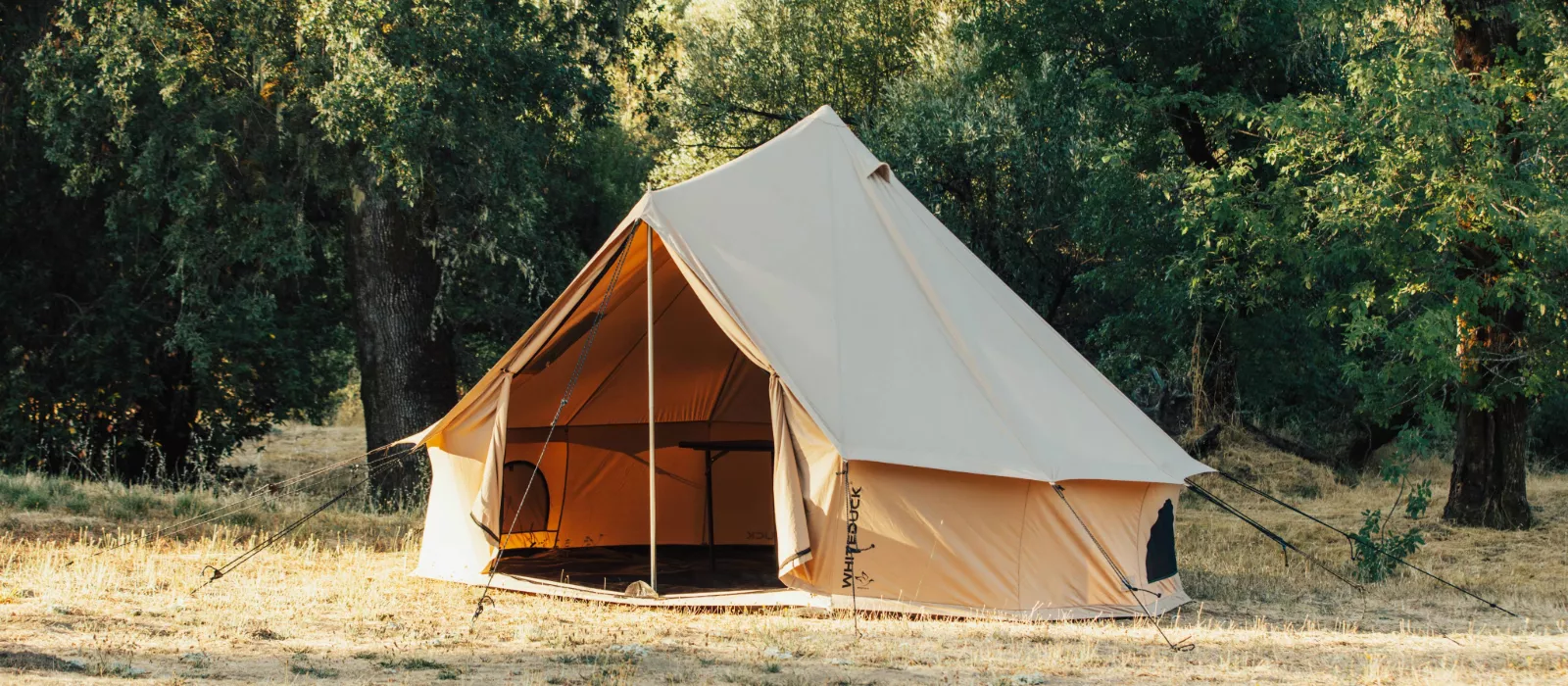
When it comes to canvas tents, the phrase “you get what you pay for” couldn’t be more accurate. These tents are well-known among seasoned campers as long-term investments, offering plenty of value for their sometimes-surprising up-front cost. But when you go to swipe your card, that value you’re getting may be hard to picture.
Table Of Contents
Today, let’s paint that picture! While the features that make these shelters awesome go far beyond the tent fabric, many of a canvas tent’s greatest assets are thanks to the canvas material itself.
So, what exactly is canvas tent fabric, what are the benefits of using it in the construction of a camping tent, and how does it affect the long-term value of a shelter? Dive in to find out!
What Is Canvas Tent Fabric?
Canvas fabric is characterized by its tight, plain weave of natural fibers like cotton, hemp, and linen. These natural fibers are often more robust than synthetic ones, making for a thicker fabric overall.
When used for tents specifically, canvas fabric utilizes an even tighter weave, a variation known as duck canvas. This tighter weave creates a denser concentration of the natural cotton fibers, which in turn, enhances some of the key advantages of canvas in the outdoors.
While the uses for canvas fabric are endless, from duffel bags to outdoor tarps, today, we’ll center our focus on canvas for camping tents and the many benefits it provides.
The Benefits of Heavy Canvas for Tents
Now that we have a better understanding of what canvas fabric for tents is, let’s break down how it excels in outdoor applications like camping.
1. Strength and Durability
The most obvious benefit of canvas fabric for tents is its natural strength and durability. Because duck canvas utilizes such a tight and dense weave of fibers, it’s inherently thicker and heavier than other tent fabric choices.
The weight of canvas for camping tents ranges, but averages between 8 and 15 ounces, offering a thick, sturdy, heavy-duty material for protection in the outdoors. Compare that to synthetic tent fabrics like polyester and nylon ripstop, with average weights of 5 to 6 ounces, resulting in a thin, flimsy material.
2. Breathability
Canvas tent fabric is also much more breathable than the fabric of synthetic tents. This is thanks to the natural fibers like cotton and the plain weave construction technique, both of which allow for airflow through the fabric.
This is most advantageous for camping in hot and humid weather, where airflow is crucial to reducing condensation and regulating internal temperatures. However, a tent can get stuffy even during a winter camping trip, so campers in all 4-seasons will benefit from the breathability of canvas.
3. Insulation
Speaking of winter camping, canvas fabric can even provide insulation. We can thank the thickness of this fabric as well as the natural fibers, both of which act as insulators to keep warm air in during cold temperature days.
Most synthetic tent fabrics are far too thin to offer any sort of insulation, making canvas the clear winner for cold-weather camping.
4. Weather Resistance
Last but definitely not least is weather resistance. Since canvas is so durable, campers can rest easy knowing a canvas tent will stand sturdy during high winds, heavy snows, and other weather conditions that will test the strength and durability of your shelter.
As we’ve also covered, canvas has the benefit of both breathability and insulation, making it the ideal material for camping in all 4 seasons, from humid summers to freezing winters.
Another benefit of the dense weave of canvas fabric is its natural resistance to water. Although it’s not 100% waterproof, this tight weave construction can repel water to a certain extent, protecting you and your gear from morning dew and light rains.
To further protect from rain and moisture, many campers will “season” their canvas tents, something only possible with natural fibers like cotton. By purposely soaking their tent before use, they swell the natural fibers, further tightening the weave and sealing the fabric against water penetration.
Canvas Tents Elevated with Fabric Finishes
High-end canvas tents will also make use of fabric finishes and coatings that further enhance the benefits of canvas. While canvas is plenty suitable on its own for outdoor use, there are several different treatments used on canvas to make up for the fabric’s few drawbacks.
These include, but are not limited to:
- Waterproofing
- Fire repellence
- UV resistance
- Mold resistance
- Mildew resistance
The Long-Term Value Examined
The immediate benefits of canvas fabric for camping tents are clear, but how do these advantages provide long-term value?
Comfort
For one, campers can enjoy maximum comfort when camping in a canvas tent. When you add together breathability, insulation, and weather resistance, there’s no doubt you’ll be more comfortable in a tent made from duck canvas.
Looking forward, when you know you’ll be comfortable, no matter the unpredictable elements of nature, you’ll be more enticed to book another camping trip, spend more time outdoors, and reap the many benefits of nature.
Longevity
In terms of longevity, a durable tent will outperform a flimsy, fragile one any day. A shelter made from duck canvas can provide 15 to 30 years of reliable use, especially when maintained with care.
There’s no better value in the long term than longevity, because the longer your tent lasts, the better bang for your buck you get from your initial investment.
Resale Value
A tent that holds up well in the long run also provides better resale value. While not everyone will want to resell their tent at the end of their time with it, some campers like to upgrade their setups, and others simply want to make a portion of their money back when they’re ready to part ways.
When you invest in canvas, you give yourself a better opportunity to do this, thanks to its ability to last decades. It’s a win-win scenario!
The Bottom Line
There’s a reason canvas has been a staple material in tent construction for centuries. This impressive fabric provides undeniable benefits, from strength and durability to weather resistance in the outdoors. Plus, fabric finishes have the ability to take these tents to another level of performance.
In the long run, these benefits translate into real value in terms of comfort, longevity, and resale value. So what are you waiting for? Invest in a canvas tent and see just how awesome canvas is for modern camping!


No Comment! Be the first one.