
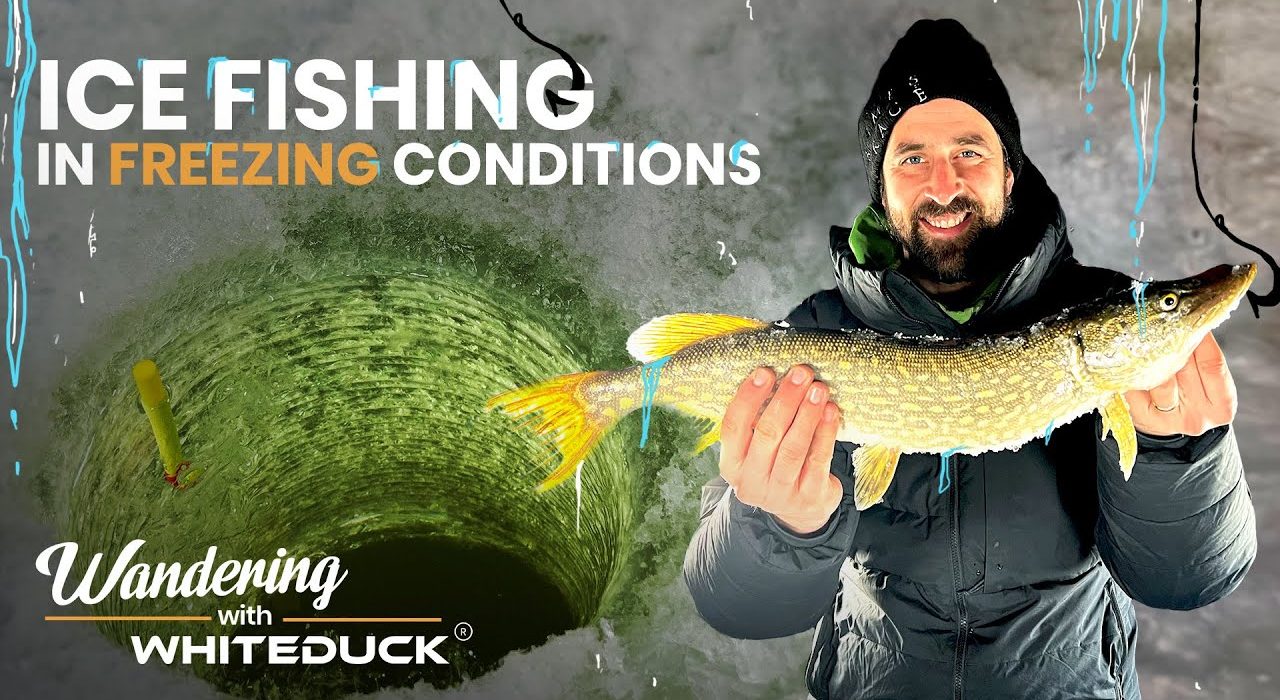
On a cold winter morning with gray skies looming, regardless of the potential storm showing in the clouds, Jack is ready for yet another adventure. On the itinerary today is a sport that seems altogether foreign and familiar at the same time. This uncanny adventure is ice fishing. It seems simple, just fishing through ice, right? But it’s actually pretty complicated with a lot of skill and knowledge involved. For today, Jack is teaming up with his friend, Phil Paradise. A native Minnesotan whose love for the outdoors is as thick as his beard. He’s an expert, and there’s plenty to pack, so Jack and Phil need to hop on it if they plan to catch some fish today.
Table Of Contents
Loading the Sled and the Gear
Like any cold-weather adventure, there is a lot of gear to pack. That is always the case when heading into the backcountry, but for ice fishing, this is a particularly large load. Jack has some of his things already packed in an everyday backpack. This is fine, but not preferred. When heading out for a day on the frigid ice, it’s wise to invest in a durable duffel bag that can accommodate all your gear. White Duck makes an incredible duffel, and Jack is making fine use of it here.
Just at first thought, fishing is fishing. Essentially, it’s just throwing a line into the water. But for ice fishing, especially to the extent that Jack and Phil are doing it today, they need a snowmobile to get out into the center of the ice. So the two load the snow sled onto the trailer, hook the trailer to the truck, and head to the lake.
It’s a bit of a haul out to the lake. The two of them are seated on the snowmobile, faces protected from the frozen air, behind them their gear bounces on a sled, tied down under a black plastic tarp. They traverse through frozen streams with tall cattails lining the shore, under a small walking bridge where Phil slows down to ensure they don’t hit the side. It feels primitive and remote, despite being on a motorized sled. After a few minutes, it’s clear: even with all this gear and planning and travel, it’s still possible to disconnect from society for a while and get to the wild.
Upon reaching their location, the wind is blowing a gale. It’s unclear whether the snow is coming from the sky or being blown from the ground. Regardless, the two men set out to secure their ice fishing shelter: a hub tent. This is very similar to a lightweight tent. It’s transportable and can fold down with spring bars. The difference is that the poles are all laced into the fabric, and by simply pulling on a couple of sewn-in handles, the tent pops up in a matter of moments.
In no time, the men are ready to load the gear inside and get to fishing.
A Shelter from the Storm
Inside the hub tent, the two men are settling in. Jack props up a propane space heater and is delighted at the thought of it warming the cozy space. There are camping chairs, small end tables, and Jack is astounded when Phil opens a cooler full of water and reveals the bait they’re to use: it’s a 6-inch fish, writhing, wet, and definitely alive. This is to be bait for, wait for it, Northern Pike. These fish can grow to be monsters. The fact that they aim to pull them from a hole in the ice is something else.
As noted, Phil is no amateur. He breaks out a gas-powered auger. This is a motorized device that can drill through thick, dense lake ice in a matter of seconds. Normally, this is done by hand, and it takes a long time and is exhausting. Phil drills a couple of holes through the 20” ice. In a matter of moments, Jack is set up with an ice fishing pole. The hub tent is heating up, and layers are coming off.
It should be mentioned that these hub tents are not traditionally used to sleep in. For a multi-day adventure, it’s wise to get off the ice for the evening and camp on the shore. It’s not likely that the ice would break through, but it will make it difficult to stay warm while sleeping on a sheet of ice. To remedy this, before setting up a hub tent on the ice, break camp on the mainland with a canvas tent. If this is done before, the tent can gather heat from the sun bearing down on it all day (if there is sun), and the interior air naturally warms from the cold wind. It’s a good way to come back to a warm tent after a long day of ice fishing.
Jigging for Panfish
While Jack is set up for the big fish, the Northern Pike, Phil is busy jigging over his ice hole. He holds a short rod, about two feet long, and bumps his line up and down in the hole with the intent of enticing the fish. The two laugh and pass beverages to one another; the scene is light, and there is no stress. It’s clear that if no fish are caught on this day, fun will still be had.
In a moment, Phil gets a bite and sets the hook. It’s unclear what will emerge from the hole when, suddenly, Phil pulls out a minuscule baitfish, flopping away on his line. It’s a small perch, even tinier than the minnow they’re using to bait the pike. No records are broken yet, and on this day, none will be. Slightly disappointed after spending hours out on the lake, the two reluctantly return home, hats in hand.
There’s Always Tomorrow
Jack and Phil, however, are not quitters. The next day, the two fellas packed all their gear up again. They load the sled on the trailer again. And again traverse the winter landscape in search of massive Northern Pike. The setup is similar, but the location is different. It’s the same lake, but hopefully this time they’re closer to where the monsters hang out. The hub tent goes up, the holes get drilled, and spirits are high. It’s time to fish.
Things start slowly as the ice fishing tent heats up. Eventually, it was bound to happen. Jack’s got something on his line. His tiny pole is flexing to its max, whatever he’s got on his line is pulling drag, and the reel whirs under strain. He keeps reeling in, and Phil guides the fishing line in his bare hand. From nowhere, the ice reveals a fish! It’s a beautiful Northern Pike. It’s not quite a monster, only about 20-22 inches, but it’s a honey of a fish nonetheless.
Phil takes out his needle-nose pliers and removes the hook from the fish’s mouth. He instructs Jack how to hold the fish under its gills so he doesn’t harm the fish, and doesn’t drop it down the hole before getting photographic evidence of his catch. Phil snaps a photo, and Jack couldn’t be happier. It’s been hours, on this day and the day before, sitting in the cold, waiting for a bite. It finally happened, and with the catch comes a sense of pride and accomplishment. An idea was forged, a plan made, and an intention was accomplished. It’s a good feeling when everything comes together.
Just Being Outside is a Win
It wasn’t a blue ribbon day. The sun didn’t shine all the time. It was, in fact, a little cold and bitter. But regardless of all of that, it still feels amazing to get outside. For the two men, catching the fish is a bonus; it’s really the camaraderie and being outdoors that is the win. In the distant hills, trees line the shores of the lake. There is abundant wood and coverage to spend a couple of nights, if the gentlemen so desire. They could pitch a camping tent and roast the one fish they did get over the hot flames.
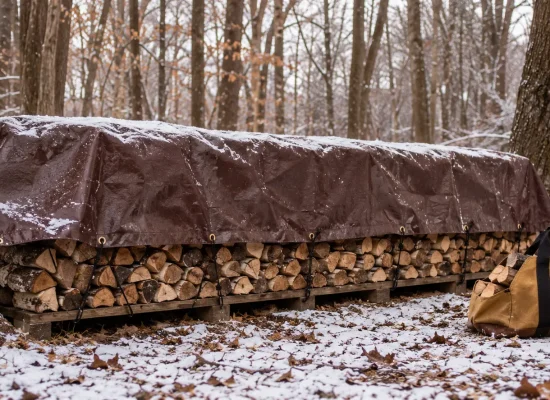
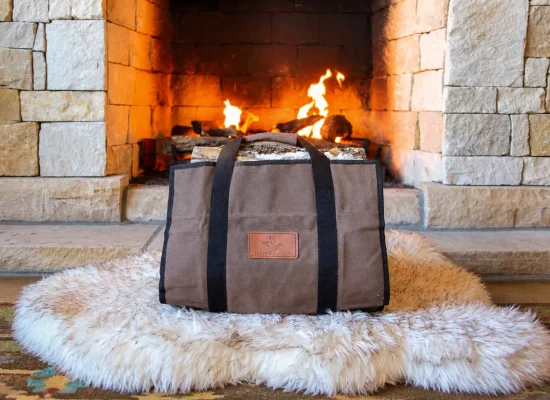
There’s plenty of fallen wood around the lake in the bare trees, the leaves under the deep snow. With a little effort, a camp would be more than possible. It’s difficult sometimes in the winter to find a suitable place to break camp for the night. To do so, it’s good to keep a few things with you. Of course, you need to have a solid winter tent, and you can’t go wrong with canvas. Canvas tents can hold up to any weather, and are particularly awesome in the winter. Staying for a night or two, it’s recommended to use a tent wood stove to keep warm and, in the worst case, keep dry. To keep the fire roaring, keep a hatchet and a log carrier. It may not seem related, but a log carrier helps reduce exposure by limiting the number of trips needed to get the necessary amount of firewood. No one wants to be outside in the cold all night or day. Having a good canvas log carrier makes sure that’s possible. White Duck not only makes incredible canvas tents, but they also make log carriers.
Less Driving, More fun
So, when Jack and Phil come back out here, they won’t have to haul all their gear out twice or load the snowmobile up on the trailer twice. Nor will they have to experience all that exposure setting up twice. When it’s time for a day out on the lake ice fishing, plan ahead and drag the canvas tent out with you. Part of the serene feeling often gained from experiencing the outdoors comes after all the setup. The more time spent finding a campsite and then breaking camp is all time that could be spent breathing in the cold air and taking on a refreshing point of view. It gets cold out there. So, look out for Jack and Phil. They’ll probably be out on the ice.



No Comment! Be the first one.