
Snow and rocks never kept anybody from a good time! You can camp just about anywhere if you have the proper know-how, and the gear to go with. To help make sure your summer adventures are limitless, we’ve compiled an in-depth breakdown of how to use tent stakes properly no matter the ground or weather conditions. We’ll also go over some specialized methods for staking, and tips for choosing a stake shape according to the type of soil composition you may run into in the great unknown.
Table Of Contents
How to Use Tent Stakes
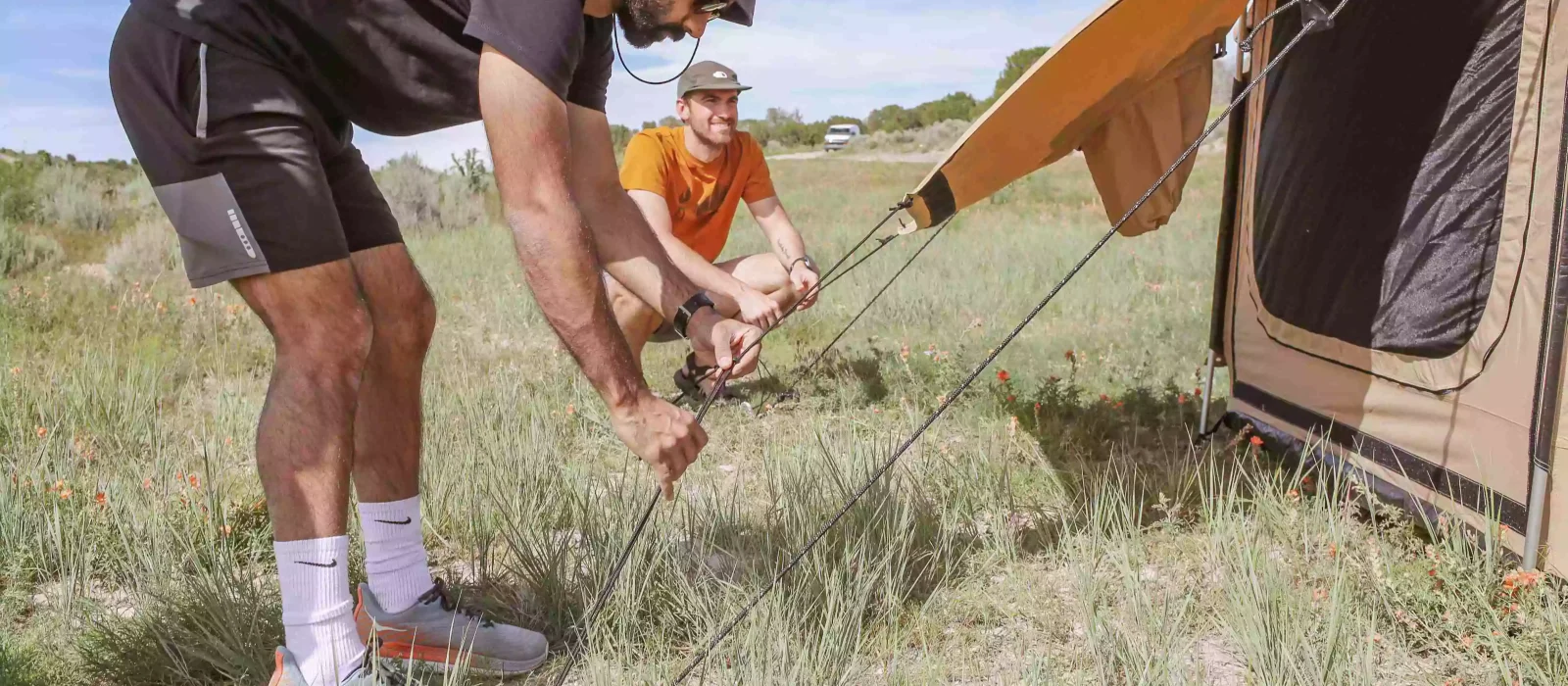
First, find your angle. This is particularly important for tents with guylines, not so much for freestanding tents. Angling your stakes is crucial to properly anchoring your tent because guylines should come away from your tent at 45 degrees. Staying consistently with this angle provides the most tension possible across your whole tent–increasing the overall sturdiness and roominess of your sleeping quarters.
Though you may be tempted (and sometimes it can be effective) to use your boot or shoe to tamp the stake into the ground, the proper way to go about staking your tent is to do so by using a tool. The best options include rubber mallets, hammers, hatchets, or even a particularly heavy rock you may have found around your campsite. Using a tool ensures that you are applying even pressure and avoid warping your stakes.
It’s important to note that you should always turn the hook of your stake away from your tent for maximum hold. Drive your stakes into the ground–do not leave them partially visible and sticking up. Don’t forget to stake down your tent footprint, heavy-duty tarp, or rain fly as well as your tent itself!
Some argue that instead of anchoring your stakes themselves, the key to properly staking a tent is to angle the guy lines at 45 degrees, and then stake the angled lines straight into the ground. As with anything when it comes to camping, methods can vary depending on terrain, tent style, environmental factors, and personal tension preference.
Choosing the Right Stakes
Stake Shape
In general, Y-shaped tent stakes are the way to go. These will offer the broadest range of seasonality and terrain versatility. The Y-shape reduces the probability that your tent stakes will bend in the face of wind or impact. This Y-shape of this tent stake also offers year-round support, as they are not only sturdy anchors but can be driven into even the toughest of ground conditions.
On the other hand, V-shaped tent stakes are going to prove your best bet when it comes to camping in loose ground material like sand, silt, or snow. The flatter feature of the top of the stake makes it easy to pound into the earth, but the V-shape offers even more flexibility around underlying rocks.
Pin stakes are the most common tent stake shape. These tent stakes are shaped exactly as they sound–like a pin, with a point at the base to make for easier soil penetration. These simply-shaped stakes are ideal for warm-weather camping and moderately to loosely packed soil but should be secured with a rock in windy conditions.
Shepherd’s hook tent stakes are similar to the pin, except they offer a hook at one end on which to secure your guy lines. Though this shape tends to bend easier than others, it is the ideal stake shape to use in rocky or rooty soil.
Stake Materials
Stakes made from titanium are incomparably strong, lightweight, rust and corrosion-resistant, but they can put a dent in the wallet. If you are looking to acquire camping gear on a tight budget, titanium might not be the most attractive option for their costliness.
Aluminum stakes, however, are a sturdy and affordable alternative to titanium stakes. Aluminum stakes are a well-loved material among campers and backpackers alike since they are pretty lightweight in comparison to other metals as well. It’s worth noting that while aluminum stakes can be successfully utilized across a wide variety of soils and terrains, they are susceptible to bending. This can be a drawback for those who plan on camping in rocky, windy spaces.
Ah, stainless steel. The old trusty. Tent stakes made of stainless steel are best described as heavy-duty and are strong enough to withstand high winds and rains–keeping your tent stable in any weather pattern. They tend to resist rust and corrosion well, too. The drawbacks to stainless steel? Their weight. Backpackers tend not to prefer stainless steel tent stakes as they can easily weigh down a pack even more so than titanium alternatives. Additionally, if you are planning to camp on rocky or densely-packed terrain, stainless steel might unfortunately prove more difficult to drive into the ground.
After all this talk about durable metals, it may come as a surprise that plastic tent stakes make our shortlist, too. Plastic tent stakes have their pros when it comes to camping on all kinds of terrain, such as their budget-friendliness and lightweight properties. Plastic tents are actually great for tough terrain, as they can bend without breaking–though we wouldn’t recommend pushing it in an area with severe wind and/or rain.
Best for rocky and dense ground surfaces are carbon fiber tent stakes. They are narrow and lightweight, but still offer titanium-level strength. The biggest con when it comes to carbon fiber is the cost. Campers trying to keep to a tight budget will often opt for any of the above options before resorting to spending a pretty penny on carbon fiber.
Staking Tactics for Any Terrain
Solid Rock
Obviously, this goes without saying, but one simply can not stake a tent into solid rock surfaces. Instead, use the modified deadman trick–fondly known as the “big-rock-little-rock” tactic. When you use this method, you will tie a stick or small rock to the end of your guy line, stacking another large, heavy rock on the extension directly in front of the smaller stone. You’ll want to avoid exposing your guy rope to any sharp edges that could cause wear and tear.
Densely Packed Soil
Soils with very small, very tightly packed particles are fantastic for firmly staking a tent. You may even find that your stakes require a tool such as a mallet or hammer in order to penetrate the ground surface–nobody loves to rain on a camping trip, but damp soil will be your friend in this situation. You can use any stake except for a sand/snow stake when camping in an area of densely packed soil.
Medium, Loamy Soil
Loamy soil is good for anchoring a tent with very little force needed. Grab your rubber mallet from the tool kit included with your canvas tent and get to tamping–straight into the ground. You can use almost any type of stakes attached to the end of your guy lines when it comes to this type of sediment. If the soil is wet or if there is a chance of rain, maybe choose thicker stakes with more holding power just in case a bit of sediment gets washed out from under your anchor.
Rocky Soil
Rocky soil can be tricky to stake a tent. The best stakes to use when dealing with unpredictably stony soils are strong nail stakes that can either crack rocks in the way or a needle stake that can shimmy between a few rocks on its way through the soil. The best method for anchoring your tent stakes in this type of soil is probably going to be the deadman or modified deadman technique, or double-staking (refer above).
Thick Vegetation
In the event that your campsite may be covered in dense, viny or grassy vegetation, you may find that your stakes are not long enough to even truly penetrate or reach solid soil. When this happens, you have a few options– either try to tamp down the vegetation as best you can, or try to use the root shafts of plants as an anchor for your stakes. By this, we mean stake right into the very base of the plants growing around your tent site. You may find that choosing titanium nails and wire stakes will help you find your grip amongst the greens.
Sand & Snow
When it comes to camping in soft terrain, anchoring your 4 season tent can get tricky very quickly. The good news is there are tent stakes made specifically for loose sediment like sand, and soft, snow-covered ground surfaces. Typically, snow and sand stakes are made from sturdy aluminum and shaped like a “U”. The unique shape of these pegs allows for double the grip in loose sediment or snow as compared to a single straight stake.
Final Tips:
When heading out to camp on snowy terrain or uneven, rocky grounds, a heavy-duty tarp will be a must-have. Having a tarp to help support the base of your tent will smooth over any lumps to make your sleeping space more comfortable, keep your tent warm and extra-insulated from the cold snow underfoot, and protect against rocks and sticks that can tear holes in your tent. Tarps can (and should) be staked down into the earth in line with the base of your tent for extra hold.



No Comment! Be the first one.