
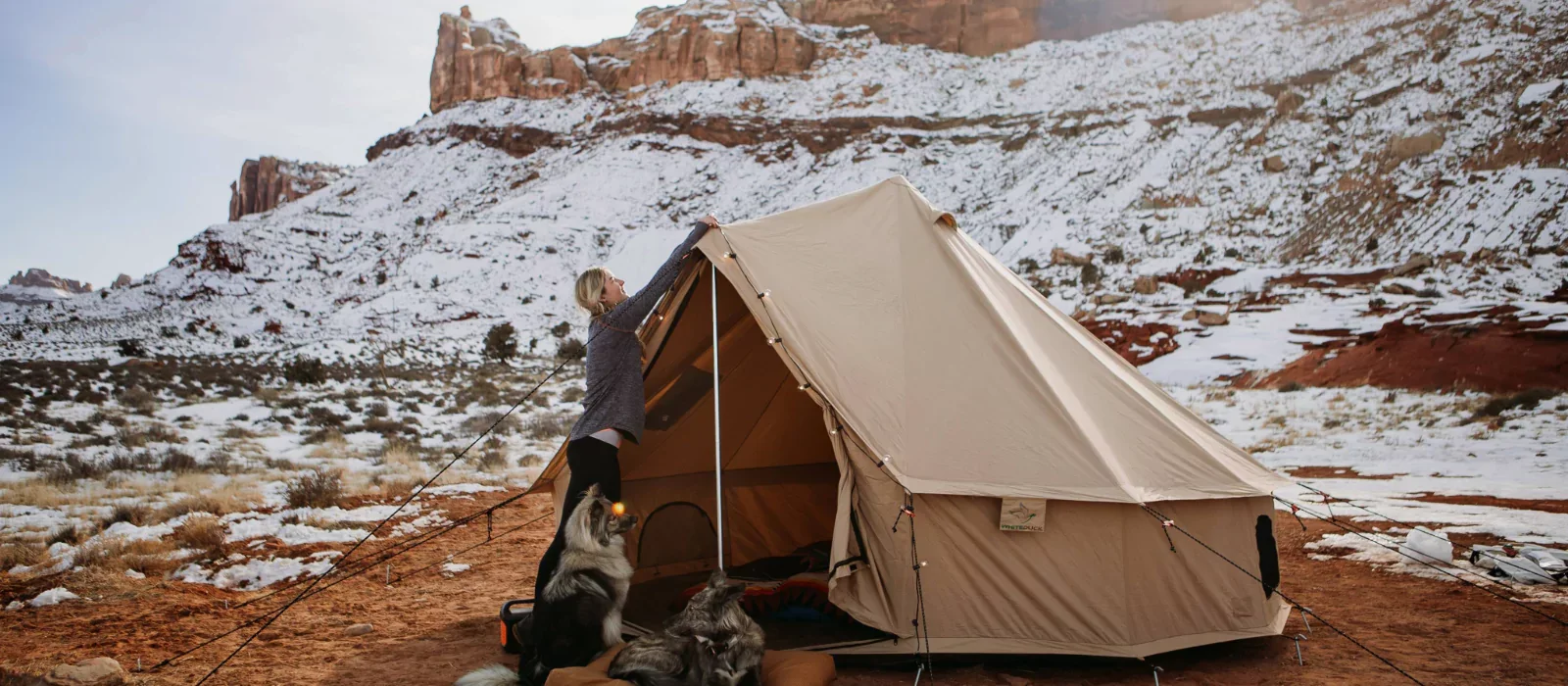
Properly pitching your four-season tent in wintery weather conditions like snow and wind requires thoughtful preparation, proper gear, and strategic technique. Whether you are venturing into the forest or setting up camp in volatile high-altitude environments, mastery of element-appropriate tent setup is crucial for the comfort, safety, and overall enjoyment of your big adventure. In this blog, we’ll share a few tips to help you effectively set up your four-season tent in the most extreme conditions, and discuss a few of our favorite accessories to help you along the way.
Table Of Contents
- Choose the Right Tent
- Key Features to Consider
- Strong Frame
- Ventilation
- Geodesic Tent Design
- Wall Tent Design
- Bell Tent Design
- Find the Right Campsite
- Prepare The Ground
- Set Up Your Four-Season Tent
- Generally speaking
- Special wintery extras
- Use A Canvas Tarp For Extra Protection
- And Maybe A Fly Sheet, Too
- Make Adjustments As Needed
- In Conclusion
Choose the Right Tent
First things first, selecting the right four-season tent is the most crucial foundational step to successfully setting up camp even in adverse weather conditions. Four-season tents are tents specifically designed to bear heavy snow loads, withstand strong winds, and safely insulate campers in subzero temperatures. When shopping for a four-season tent, seek features such as reinforced seams, sturdy poles, and hardy construction materials in both the tent’s skeleton and its coverings that can withstand harsh conditions. The infrastructure should be made of materials such as galvanized steel, fiberglass, or aluminum while the cover should be made of something durable and versatile such as cotton canvas. You may also wish to choose a four-season tent that includes a tarp or similar covering to offer some extra protection against snow and moisture.
Key Features to Consider
Strong Frame
A sturdy, robust frame is typically one made from hefty materials like aluminum or fiberglass, that can effectively help your tent withstand gusty winds and heavy snow and ice loads.
Ventilation
Though it may seem counterintuitive, proper ventilation is key to safety and comfort in your four-season tent. Striking a balance between warmth and air circulation is necessary even when the goal is to stay as insulated as possible in subzero temperatures. We recommend ensuring that your tent has several adjustable vents to help manage condensation and airflow in your tent. In snowy conditions, condensation can build up quickly, leading to dangerous moisture-related issues inside.
Geodesic Tent Design
A geodesic tent is a tent characterized by a dome-shaped design and the use of multiple poles to form a crisscrossed framework in order to evenly distribute stress and weight across the entire surface of the tent rather than subjecting one area to sagging and wear. The very design of geodesic tents is helpful for setting up in snowy conditions, because the weight of your tent will not be concentrated in just one area. They are also effective in standing against high winds.
Wall Tent Design
Wall tent designs consist of four rectangular walls, a rectangular base, and a sloped ceiling that allows for plenty of headroom and spaciousness inside. Wall tents are generally supported by a simple combination of vertical and horizontal poles, guy lines, and stakes which effectively secure the tent. Because wall tents are designed with steeply pitched roofs they are better at shedding snow, significantly minimizing snow accumulation that–if heavy enough–could collapse the tent altogether.
Bell Tent Design
Bell tents have a distinctively simple, circular design with a single central pole that is responsible for supporting the structure. The sides of the tent slope gently downward, like a bell, giving the design its name. In addition to the single central pole, strong guy lines and weather-appropriate stakes secure the tent’s heavy-duty canvas fabric to the ground. White Duck Outdoors bell tents are made from heavy-duty cotton canvas, providing good insulation for cold-temp camping. The canvas is treated with a water-resistant coating, which prevents snow and moisture from seeping in. The structural integrity of bell tents withstands adverse weather, as the design is easily adaptable to winter conditions with appropriate modifications (such as takes and tie-down methods we’ll discuss later).
Find the Right Campsite
The location where you set up your tent is crucial to its success against the elements. When facing snowy conditions, choose a site sheltered from strong winds. This could mean a spot behind a natural windbreak like thick trees or a hill. Try to avoid low areas where snow tends to accumulate and could collapse your tent.
As always, pitch your tent on flat, stable ground when setting up your tent in the snow to prevent uneven buildup.
Last but certainly not least, be sure you’re not camping in an avalanche zone by checking the local avalanche forecast before heading out and generally avoiding steep slopes.
Prepare The Ground
Before setting up your tent, prepare the snowy ground to create a stable foundation. You’ll need to pack down the snow tightly by using a shovel or snowshoe to create a level area. If the snow is particularly deep, consider digging a platform.
Try your best to remove any loose snow or ice from the area to avoid drifting into your tent.
Set Up Your Four-Season Tent
Here are a few important setup suggestions to help you ensure your four-season tent will be properly secured and prepared for snowy, windy conditions.
Generally speaking:
- Start by laying out your tent’s ground tarp or footprint. This will add another layer of protection for the tent floor against moisture and provide insulation between the tent and the snow.
- Assemble your tent frame according to manufacturer instructions, ensuring that all poles are securely connected and properly aligned.
- Once your tent’s frame is securely in place, drape your covering over it, carefully aligning the corners.
- Stake your guy lines into the earth. Angle the actual guy lines away from your tent at 45 degrees, then stake the angled lines themselves straight into the ground using a mallet or tool.
Special wintery extras:
Stakes– In general, you’ll want to seek out Y-shaped tent stakes. Not only do they offer terrain versatility, but they also minimize the risk that your tent stakes will bend in the face of wind or impact. Y-shaped stakes can also be driven into the roughest of ground conditions, including frozen ground. However, for softer snowy conditions you may want to have extra U or V-shaped stakes on hand. You can purchase stakes specially designed for snow or ice.
In deep snow, bury the stakes horizontally for extra stability.
Use A Canvas Tarp For Extra Protection
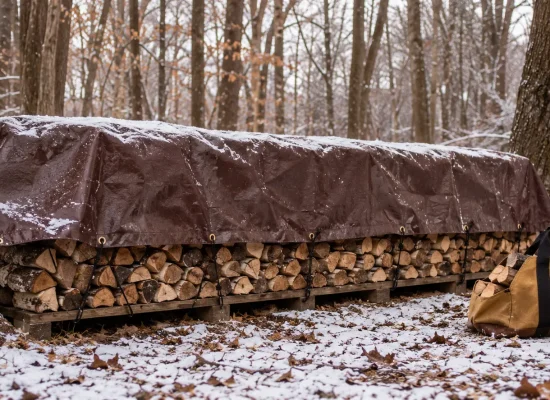
Canvas tarps provide extra insulation and protection against icy cold moisture. Place the canvas tarp over the tent, making sure it’s large enough to cover the entire tent even beyond its edges. Just like you did for your tent, use stakes or guy lines to secure the tarp in place.
And Maybe A Fly Sheet, Too
The tent fly sheet is a critical component for protecting your four-season tent not only from rain but wind, snow, and ice as well.
To properly secure your fly sheet, drape it over the tent, aligning it with the doors and windows of your tent and ensuring it covers all sides and extends to the ground. Ensure that it is pulled taut in order to prevent wind from getting between the layers.
Make Adjustments As Needed
Once your tent has been pitched, the work doesn’t end! Continuously monitor the weather conditions and check for signs of stress or tent damage. Make repairs as promptly as possible and adjust the tent position as needed. Periodically remove heavy snow with a broom or soft brush to prevent excess weight from causing damage to the structure of your tent.
In Conclusion
Pitching a four-season tent and setting up camp in snow and wind is not for the faint of heart. However, it can be done with very little frustration with careful attention to detail, and proper preparation. By choosing the right tent equipped for such extremes, preparing the ground for setup, and using extra layers of protection like canvas tarps and fly sheets, Setting up a four-season tent in snow and wind requires careful attention to detail and preparation. By choosing the right tent, preparing the ground, properly securing your tent using appropriate stakes and guy lines, and using a canvas tarp and tent fly sheet, you can create a stable and comfortable shelter for the whole crew no matter the season.
When camping in snow and wind, never let your guard down. Winter weather can quickly turn for the worst, and you must prepare yourself and your dwelling for the intensity. Make necessary adjustments to your tent to maintain its structural integrity and remain well-equipped to continue on your winter adventures.
With proper preparation, protection, and tools, you can maintain a secure and comfortable camping environment whether camping in a winter wonderland of a forest or on a windy alpine ridge. We are here to help you safely enjoy the beauty of all four seasons.



No Comment! Be the first one.