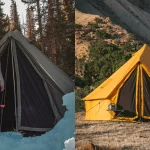

All Season Camping
- 2 guides
- Updated
Every story in All Season Camping
Showing 1–2 of 2 stories

From the White Duck shop
Gear for this topic
Prices and stock update from the White Duck shop.


Ground Tarp (opens in a new tab)
From $65

Avalon Bell Tent (opens in a new tab)
From $1,200
Quick questions about all season camping
Short answers from our guides, each linked to the full article.
Have a question we haven’t answered? Ask the team
Usually not right away. A new cotton canvas tent should be seasoned first: pitch it, soak it and let it dry completely so the threads swell and close the needle holes. Re-treat it with a canvas water repellent when water starts soaking in instead of beading.

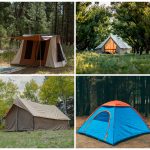
A cabin tent has near-vertical walls and a tall, rectangular floor, so you can stand up and use the whole space. A wall tent is the heavier, traditional framed canvas design, built for long stays and often for a wood stove. A dome tent uses crossing poles: lighter and faster, with less headroom.
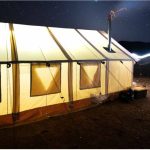
Yes, if the tent is made for it. Use a tent with a fire-resistant stove jack, set the stove on a heat-safe base with clearance from the walls, keep the tent ventilated and run a carbon monoxide alarm. Never use a stove in a tent that wasn’t designed for one.
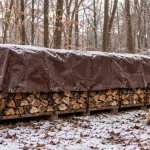
Stack it off the ground on pallets or rails and cover only the top of the pile with a heavy-duty tarp, leaving the sides open so air can move through. Wrapping a stack completely traps moisture and invites mold.
Brush off dry dirt, then spot-clean with cold water and a soft brush. Skip detergent, bleach and washing machines, which can strip water repellency. Always dry the tent completely before packing it away to prevent mildew.

It depends on the bed and furniture. A 4 m (13 ft) bell tent fits a double bed and a little furniture, a 5 m (16 ft) tent fits a queen bed with seating, and 6 m (20 ft) and up suits families or a guest setup. Check the floor diameter, not just the person rating.