
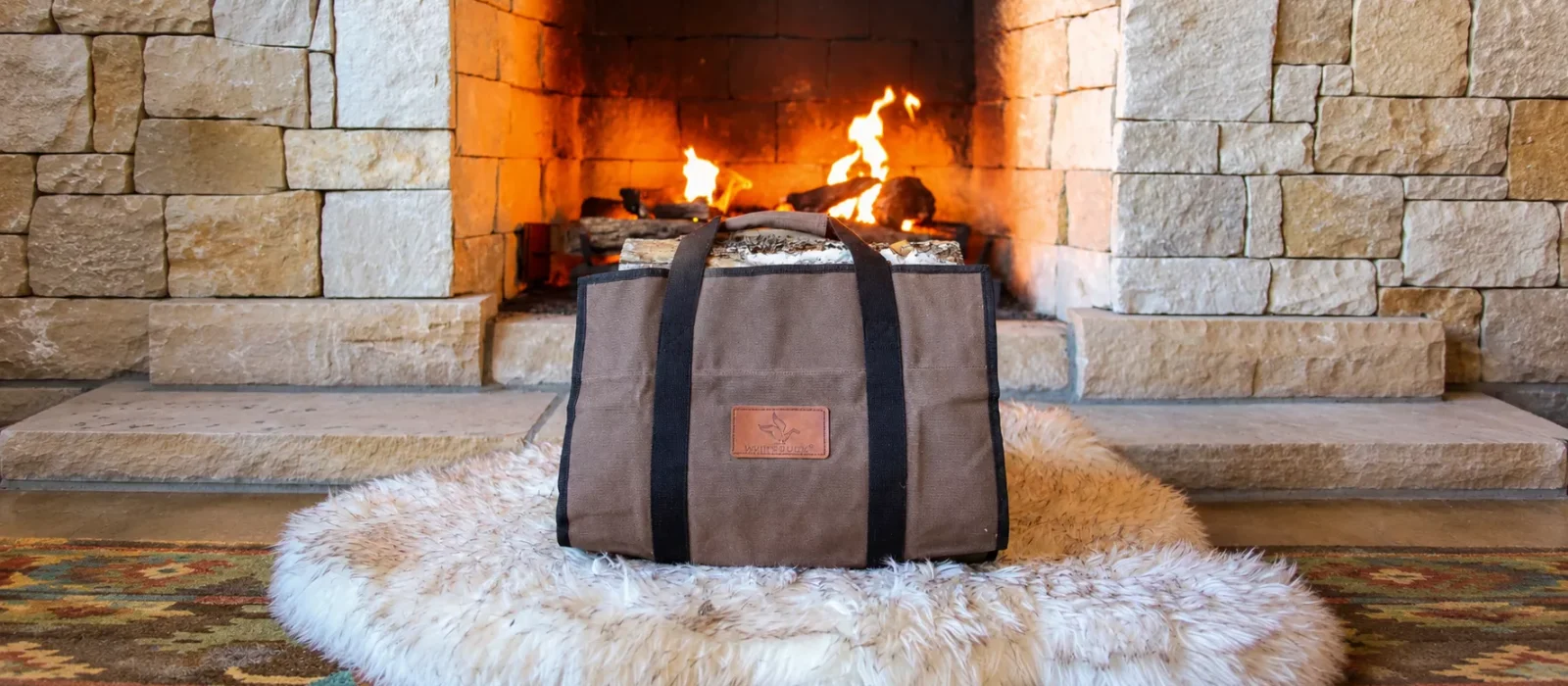
If you are someone who has the chance to still heat your home with a wood stove, then consider yourself lucky. For the most part. Everyone knows the routine: walk to the wood pile, load up your arms, walk back through the house, and drag a trail of bark, sawdust, and wood chips across every floor between the back door and the fireplace. Doing this multiple times a night, a few times a week, for a full winter season will wreak havoc on your vacuum. To preserve your vacuum and save the mess, the solution isn’t complicated. A canvas log carrier for your fireplace is the best way to keep the debris inside the carrier and off your floor and consolidate all the awkward arm carrying while keeping the sap and bark dust off your clothes. This covers why the armload system is a bad method, what a carrier actually does differently, and how to pick the right one for your home setup.
Table Of Contents
The Problem with Carrying Firewood by the Armload
The armload method works in the sense that if you desperately need wood to get to your indoor fireplace, it will get there. But everything else about it is a problem.
The first issue is bark. Split firewood constantly sheds bark, and the pieces that fall off from the woodpile to the hearth don’t magically get up on their own and walk outside. They sit on the floor until someone deals with them and, in many cases, get kicked under the couch or end table and remain there for longer than wanted or expected. If you’re burning wood in your house constantly through the winter, then you are also constantly sweeping and vacuuming up after each fire.
Sap is the next big issue, and while it doesn’t just appear on the ground as bark does, it has a detrimental and lingering effect. Sap transfers from wood to clothing, carpet, a rug, or the furniture on contact and is not easily removed. Many folks will concede a flannel shirt as the “fire shirt” that they know will get damaged or ruined by sap from carrying wood with their arms. This isn’t a solution, though, if every time you need or want a fire you have to find that shirt, or concede another shirt to the donation bin.
The third problem is simple efficiency. An armload of wood is physically awkward to handle, and no matter how strong a person is, there is a limit to what you can carry in your arms, open and close a door, and basically manage on your own. Not to mention, wood does not all come in neat stacks. When burning wood for warmth, you take the wood where you can get it. If someone offers wood from an old apple orchard, you take it. But that wood can be gnarled and misshapen and also difficult to handle. A canvas log carrier carries a significantly larger load each trip, with more efficiency and ease.
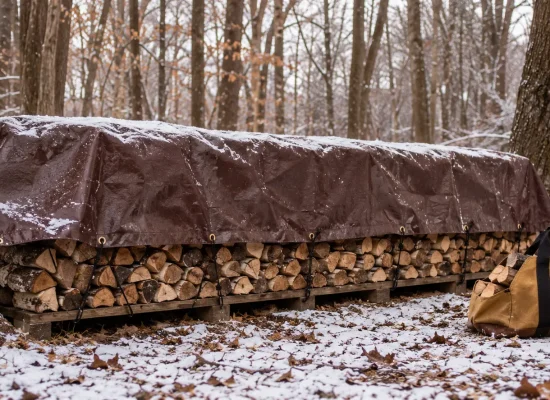
The last problem is insects. When wood piles rest for a long time, through the summer months and into late fall, without being disturbed, many insects make it their home. Stacked firewood becomes home to spiders, beetles, and other critters that live in the gaps between the logs.
What a Canvas Log Carrier Does Differently
The functional case for a log carrier for a fireplace is straightforward. The carrier wraps around the wood load and tucks in the bark, wood dust, and debris rather than allowing it to scatter on your floor. The sturdy handle keeps the load away from any clothing, and one load with a canvas log carrier will move the equivalent of two or three armloads of wood (depending on the size of the arms).
Canvas is the specifically right material for the job, and that’s not because it’s good-looking. Cotton duck canvas is dense enough to block the fine wood dust and chips that would otherwise poke through a looser mesh fabric. It’s also durable enough to handle the jagged, rough edges of split wood without ripping at the seams. Also, the fabric is soft enough not to scratch interior surfaces while being light enough not to add a bunch of extra weight.
The same cotton duck canvas that White Duck Outdoors uses on their tents, chosen specifically for its durability and density, is the material that makes a canvas log carrier a long-term purchase and not an annual bill. A well-built carrier should handle years of this kind of work without the seams or the fabric giving out. And as the years go on, the worn look of the canvas only earns more credibility as it grows in rustic beauty.
Choosing the Right Size and Style for a Home Fireplace Setup
The two practical variables to consider here are load size and load length.
Load size is how much wood the carrier can load per trip. Most users are carrying 4-6 splits per load, which is almost an evening’s worth of burnable wood with about 2 loads. A standard-size canvas log carrier can handle this in one load, easily. Oversized carriers are designed for folks who heavily run large wood-burning stoves as a primary heat source. These folks want to minimize trips going out into the cold while getting as much wood as possible. The right size for you is the one that moves the right amount of wood for your use and is genuinely efficient without causing too much strain.
Log length matters because you don’t want the ends of your wood hanging out the end of your carrier. Most residential wood is cut between 16 and 18 inches. A carrier sized for those lengths will keep every inch of the wood covered with fabric. This ensures that there is absolutely no sap exposed and a minimal chance for bark or wood dust to reach the interior floor.
Style comes down to preference. It’s all up to you. A wrap-around sling carrier with long handles can be used to carry at your side or thrown over your shoulder. A tote-style carrier works more like a bag or, for those who can relate, a briefcase. Either way, they both contain the debris effectively. The sling style tends to naturally handle the longer logs, while the tote style is easier to set down and unload. Again, this is a matter of preference.
The Habits That Make It Work
The carrier itself eliminates most of the mess and worry, but establishing some strong habits early on will take you the rest of the way.
Before loading each log into the carrier, bump the end of the log against something firm: a part of the wood stack or a concrete slab. This ensures the easy debris to remove will fall off in the initial moments. It takes only a couple of seconds, and with consistency, it will save you the possibility of that fallen bark getting inside.
Load the carrier outside, as close to the woodpile as you can get. This sounds obvious, but many folks will dig through an unkempt woodpile and end up carrying the load halfway to the house and then loading up the log carrier. This allows for sap and wood chips to get stuck to your clothing and nullifies the very purpose of the canvas log carrier.
Before getting to the door of the house and walking inside, rest the carrier on the ground or deck while still holding the handle. Give the load a bit of a bounce on the ground, and even more of the debris will loosen as the logs rub together. This will keep some of the larger pieces inside the carrier as you load the wood into the fireplace.
These are just a few simple habits that will help you keep your home clean, keep your clothes sap-free, and will make loading a log carrier more of a consistent practice.
Where to Keep the Carrier so You Actually Use It
A canvas log carrier that lives high on a shelf in the garage, or tucked under a bench in the basement, isn’t going to get used much on the daily. This is a practical solution, and so it needs a practical place of storage. It needs to be stored in the flow of starting and maintaining a fire.
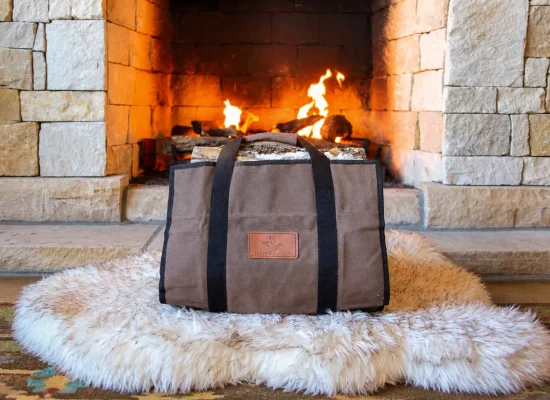
The most practical location to store a log carrier is next to the hearth where it can be loaded the night before, or grabbed on the way to the woodpile. A carrier that is already at the fireplace, stacked with wood, when the fire needs feeding is not only a perfect solution, but a relieving sight. It simply removes any friction from acting on the impulse to start a fire.
If the woodpile is some distance from the back of the house, or if indoor fires are only started intermittently, then a spot hanging near the back door is perfect. This makes it easier to grab off a hook or shelf and head to the woodpile with the log carrier in hand.
Whether a fire is a necessity or a luxury, the idea here is to remove the steps from wanting to have a fire to actually getting a flame lit. Planning ahead always helps, but acting easily on an impulse decision is also nice.
Why Canvas Beats Alternative Materials
The market for firewood carriers is vast and creative. They can be made out of polyester in the shape of totes, plastic-frame carriers, and even, in some older styles, stained steel to match the tools around the hearth. They all move wood, but they do not all hold up the same way or present the same level of efficiency.
Cheap polyester carriers tear easily at the handle and attachment points after decent use because the material cannot handle point-load stress again and again. Plastic frame carriers can scratch indoor wood surfaces, can be bulky, and are not efficient with their use of space in both hauling and being stored. Woven synthetics also let fine dust through that will end up on the floor. And while a steel carrier might match the tools, they are often oddly weighted, can’t carry much wood, and take up a lot of space.
Cotton duck canvas handles the point-load stress that polyester cannot, nicely retains fine debris, and gets more durable with use over time, rather than breaking down as plastic-formed carriers can. A canvas log carrier built from this material offers a dependable, long-lasting alternative.
One Carrier, Every Trip
A canvas log carrier is the best way to carry firewood at home and is a small upgrade that can drastically change the practice behind the reality of heating a home with a log fireplace. The sap stays off the flannel. The wood chips stay off the floor. Perhaps the best part: the amount of wood doubles per load, so there is no need to catch a chill when you set out to get wood for the fire. None of this requires a system overhaul. Just some elegant solutions to some fundamental problems.





No Comment! Be the first one.