
There is a persistent myth that camping is the cheaper option. Attending a concert, seeing a friend, and staying outside of town, or attending an event in another state, are all good reasons to find a local campsite and set up a tent for the night. For a time, it seemed to be the widespread belief that if you were going out of town for a summer vacation, camping would be the easier and cheaper option. The truth is that this isn’t always the case, and with the broad range of camping gear at different levels of quality, a single family camping trip can cost tens of thousands of dollars.
Table Of Contents
Taking the easier and cheaper version is, of course, not the only purpose of camping with your family. Likewise, you don’t have to buy your gear all over again, like a hotel room, each time you go. So, there are pricing restraints, repeated costs, one-off purchases, and other pricing figures to consider when evaluating camping costs in 2026. This post breaks down these costs into two buckets: What you spend every time you go camping (food, fuel, campsites, permits) and what you will only need to purchase once (tent, sleeping bags, gear). The idea is to provide real and current figures to make an educated budget when approaching the cost of your 2026 camping trip.
The Cost of Gear: What You Buy Once
If you’re wandering into your local outdoor retailers with no gear in mind, no gear in the garage, and the intent is to outfit a family of four or five with everything they’ll need for a few days in the wild, the sticker shock is going to come hard and fast. This price will only compound when we get to the section about recurring costs. It can feel overwhelming. Also, some outfitters will oversell their gear, push high-ticket items, and insist you need more than you do. That same feeling comes to mind when you hear a rattle in your car’s engine. But educating yourself on what you need and what you need once is the best way to approach this transaction.
The Tent: Your Biggest Single Decision
This will be home base. The place where everyone will feel safe, where they’ll sleep, and where they will either want to return to or consider a place to avoid. If you want to pass on the love of the outdoors for generations, then take careful consideration of your primary structure. The real decision is going to be between nylon, polyester, or, in other words, synthetic fabrics, and a natural fiber like canvas. Each tent material has its advantages. Synthetic tents are lighter and more packable, but even the high-end tents will suffer UV degradation and, in 4-5 years, need to be replaced. Their seams pull and weaken over time, and water begins to seep through. They will get you to the top of a mountain with your gear on your back, but you might get soaked through or produce an unruly amount of condensation on the inside.
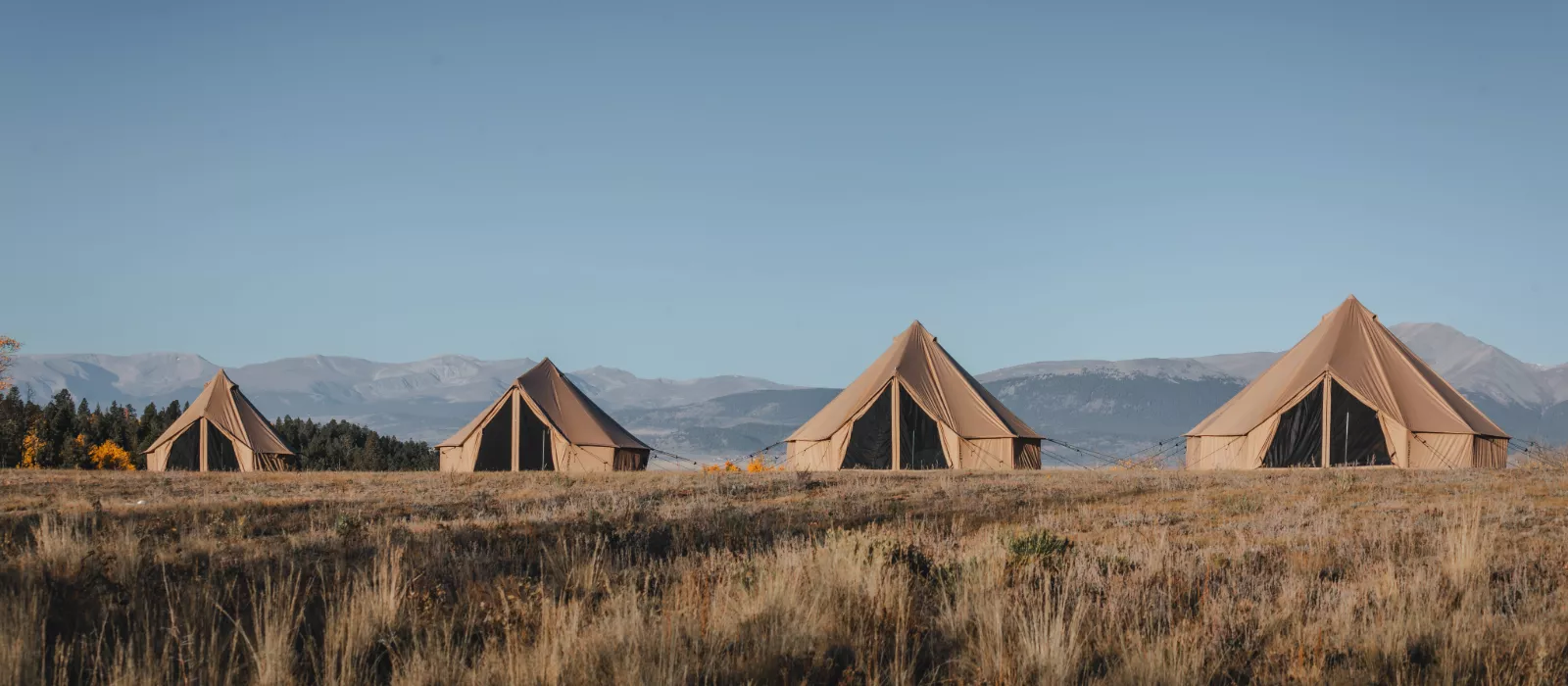
Likewise, canvas tents do have their points of pride and their pitfalls. Duck fabric is extremely durable, but it is heavy. It will take a stout individual to get a 16’ wall tent to the peak of any mountain. But this is really the only downfall of the canvas tent. Their structure is reinforced with guy lines and secured for inclement weather and high winds. The fabric, once treated, becomes extremely water-resistant and will only improve over time. Canvas tents are designed to last. They are rugged and durable, and when you purchase a quality canvas tent, it will be something that is handed down for generations. There are numerous styles and use cases for those styles. While most synthetic tents have largely gone the route of the dome shape, canvas tents still adhere to classic shapes like a cabin tent, a bell tent, and the wall tent, which looks more like a wood cabin than a cabin tent.
The pricing for a canvas tent is going to be more upfront, but when the synthetic tents need to be replaced every few years (and that is with proper care and no incidents from children), the canvas tent will last. Here is a look at a range of prices of both synthetic and canvas tents:
- Nylon / synthetic tents: $100–$600 depending on size and brand. Lighter, cheaper upfront, replaced every 4-6 years.
- Polycotton tents: $400–$900. Middle-ground performance, middle-ground lifespan, middle-ground price.
- Canvas tents: Higher upfront cost, significantly lower cost per use over time.
While there are dozens of brands that make a range of synthetic tents, White Duck makes an incredible line of canvas tents. As noted, they do present a higher cost up front, but will earn that back in the long run.
White Duck canvas tent pricing for reference:
- Regatta Bell Tent (10′): $590: couples, glamping, festival camping
- Regatta Bell Tent (13′): $770: small family
- Prota Canvas Cabin Tent (10’x10′): $770: family of 4
- Alpha Wall Tent (12’x14′): $2150: hunting camp, extended base camp
When considering the tent you want to invest in, keep in mind the kind of camping and outdoor experience you usually pursue. Many people buy into the hype that the lightest and fastest is the only way to go. Not everyone intends to ascend Everest on their family getaway, so maybe the $1500 dome tent that weighs less than ten pounds isn’t the best way to go. In reality, most camps are spent out of the back of a vehicle, at a modernized campsite. For these experiences, a sturdy, roomy canvas tent that the whole family will fit in and enjoy might be the way to go.
Sleeping System
There are a few ways to go about this setup, as well. For most campers with families, getting off the ground is ideal. The cost for sleeping bags can also boast a wide range, starting at under $100 and stretching to thousands. Here is a good place to start for a sleeping system setup.
- Sleeping bags: $60–$300 per person depending on temperature rating and fill
- Sleeping pad or air mattress: $30–$150 per person
- Camp cots (optional but worth it for base camp setups): $50–$150 each
White Duck also makes a line of high-quality sleeping bags, the Slumbernest line, which ranges from $ 110 to $ 195, depending on the temperature rating. For a solid setup that will last for years, White Duck has the shelter and sleeping system ready to go.
Camp Kitchen
This might be the most variable category in both price and amenities. Some folks like to eat and eat well on their camping trips. Others like to reheat leftovers or boil MREs. If you like to eat chili out of a can, then a small two-burner stove will be fine for the whole family. If you want to bake sourdough on the campfire, a set of Dutch oven pans might be advisable. But for those just getting started, here’s a solid setup:
- Two-burner propane stove: $60–$150
- Cookware set (camp-specific): $40–$100
- Cooler: $50–$400 (entry-level vs. hard-sided premium)
- Utensils, plates, mugs: $30–$60
Again, many people find old pans at secondhand stores. Some use old flatware from the home kitchen and upgrade there. Whatever you do, it’s recommended not to use Teflon and to try to avoid BPA and phthalates in your camp plates if you go plastic. Stainless steel is always preferred.
All the Rest
People need to move around camp at all hours, sit when and where they want, heal their cuts, eat at a table, prepare their own plate of food, and so forth, just like they need to at home. For this, there is a brief but important list of necessary items to include in your kit.
- Headlamps (one per person): $20–$50 each
- Camp chairs: $30–$100 each
- Camp table: $40–$120
- First aid kit: $30–$60
- Lighting (lantern, 2 to 3): $20–$80
Depending on how comfortable you want to get is up to you, and eventually, everyone develops their own preferences and style in the backcountry. If you start with these amenities, you’re going to at least get through the first weekend. If you’re not careful, you’re going to have fun.
The Per-Trip Costs
Once the question of gear is sorted, every trip has the same recurring cost structure. For experienced campers, this is where the cast structure really comes into play. In this area as well, you’ll want to consider how extensive you want your comforts to be. Water? A shower? Flush toilets? A game room? These days, there are numerous ways to camp in the wild. At times, it doesn’t even resemble camping, and that’s okay. Here is a breakdown of some of those options.
- Dispersed/free camping (BLM, National Forest): $0 — no hookups, no facilities, often the most scenic option
- Primitive developed campsite (pit toilet, no hookups): $10–$20/night
- Standard developed campsite (flush toilets, running water): $25–$45/night
- Full hookup RV-style site (tent camping allowed): $40–$65/night
- Private campgrounds: $35–$75/night — wider facility range
- National Park campgrounds (peak summer): $20–$35/night, plus park entry fees
In some instances, like National and State Parks, there are options to save some money by using a Military ID, buying annual or lifetime passes, and senior discounts apply.
Eating is a Small, Good Thing
Going back to your kitchen setup, there is a lot of variability in what you can do here. Consider a modest budget for those simple trips, and longer, more extensive, and celebratory trips warrant a little investment. Here’s a simple pricing guide to help you consider a good range of what to spend on each person per day. Consider where you buy your groceries as well. If you’re headed to a mountain town that has one small, local grocery store, you’re going to end up paying a lot more per person per day.
- Budget camp cooking: $8–$12/person/day
- Comfortable camp cooking (real meals, quality ingredients): $15–$25/person/day
- Glamping/base camp style (full meals, cooler-dependent): $25–$40/person/day
This consideration for food is on the frugal side and doesn’t take into account the type of food you prefer. Ideally, you’d want to make up a menu before you leave and always plan for more calories than you think you will consume. It takes a lot of energy to move around in the wild.
Fuel and Transportation
No one just appears at a campsite, and a fire isn’t magically conjured all night. There are myriad costs that many people forget when they begin budgeting for a campout. It requires a little more than just throwing some blankets in the back of the car. Consider the following:
- Driving to the campsite: Calculate round-trip miles x your vehicle’s MPG x current gas price. A 200-mile round trip in a truck getting 18 MPG at $3.50/gallon runs about $39 in fuel.
- Firewood: $8–$15/bundle at most campgrounds. Budget one to two bundles per night.
- Propane: A 1lb canister runs $2–$4. A 20lb tank (refillable) is $20–$30 to fill, more if you have to purchase the original tank.
Consider where everything has to go as well. It might be wiser to buy 3-4 1lb canisters of propane instead of the 20lb tank. Other things to consider.
Permits and Extras
Everything depends on your interests and what the family wants to get up to this year. Camping costs in 2026 are noted here as a kind of base rate, but if there are extracurriculars you want to get into, you should note those as well.
- Timed entry permits: Free-$2 at most parks that require them, but require advance planning
- Wilderness permits: $5–$15/person at some destinations
- Fishing license: $15–$60 depending on state and duration
- Activity extras (kayak rentals, guided tours, etc.): Highly variable — budget $30–$100/person if activities are part of the plan
Getting there is just the beginning. What you do when you get there can change things as well.
What does a full Camping Trip Cost in 2026?
The final cost here can range wildly. But this breakdown should help you get an idea of what you’re getting into:
- Tent: $100 — $2,500+
- Sleeping system: $90 — $450+ per person
- Camp kitchen: $180 — $710
- The rest of the kit: $140 — $410
- Campsite fees: Free — $75/night
- Food: $8 — $40/person/day
- Fuel and transportation: $20 — $100+
- Permits and extras: Free — $100+/person
The total cost for a modest setup for a first-timer, family of four is going to be about $1,500-$2,500. For an experienced camper with gear already sorted, that number drops dramatically to about $200-$400. If you are setting up a full base camp and you want to do it right with a canvas wall tent, a quality kit, a national park visit, and activities, you’re going to be more in the $3,500-$5,000 range.
It is a lot of money up front, but it’s worth it. If you’re camping a few times a year with the whole family, the gear will pay dividends. That repayment might not always come in the form of saved money, but the experiences held and remembered will outweigh any cost to the pocketbook.


No Comment! Be the first one.