
Winter has firmly set in, and while some states and elevations are still waiting for the snow to come, numerous cold fronts have blown through. Covering Washington State, northern Idaho, over Montana, and across both Dakotas, single-digit temperatures are common in the frosty months. December is always a shock to the system, and once it feels normal, January and February seem to twist the frozen screws and make the season nearly unbearable. The avid camper and outdoorsperson still wants to get out into the wild, and by all means, they should! Luckily, there are some solutions to the cold.
Table Of Contents
Wall tents alone are great for keeping out the winter cold, but pairing one with the best wall tent stove is a surefire way to stay warm in a tent, even in sub-zero temperatures. This article will give some good ideas to make sure you stay warm in a cold camp, even in the most brutal conditions.
Know What’s Coming
It doesn’t matter if the weather is going to be 115 in the Sonoran desert, or -30 in the Canadian tundra; the most important thing any camper or outdoor adventurer can do is plan ahead. This includes checking the weather patterns. In the winter, storms can materialize out of nowhere and inundate a 50-square-mile area. It can be daunting, but with the right preparation, almost every circumstance should be easy to handle or obvious to avoid.
Weather is More than Storms
Before anything is packed up, check the weather. A responsible camper will always know what situation they’re about to head into, during any month of the year. Wind conditions, air quality, and the UV index are often all afterthoughts when considering the weather. Precipitation and stroma warnings are one thing, but other aspects of the weather can make a routine trip very uncomfortable. So, check all the boxes.
Anticipate the Terrain
There are always simple weekend trips to the local campsite, and then there are intense overnighters, and everything in between. Knowing the lay of the land before getting to the location is prudent, and packing for that adjustment is key. If the campsite is approachable and is effectively just car camping, it’s fine to throw everything in the back. But if the approach to camp is a hike, then there are some things to consider, especially in the snow. To be the most efficient with energy and supplies, and hopefully packing to make only one trip, here are a few strategies to consider:
- The Sled: Most popular in a winter setting, gearing up a plastic sled is a smart way to get a lot of gear deep into the woods. If multiple people are dragging their own gear, a few cheap plastic sleds will do the trick. If one person is carrying the brunt of the weight, it is like a wide-bottomed sled. These sleds will fit a wall tent and a tent stove, plus all the sleeping gear and supplies needed for a weekend in the wild.
- The Backpack and Duffel: Depending on the terrain, a sled might not do the trick. Considerably if the trail is steep, or some scrambling is required. For these instances, a backpack and/or a canvas duffel bag are the way to go. In the winter, these are going to be tough conditions, so a tough bag is necessary. White Duck Outdoors makes a canvas duffel that, for the price and quality, is unmatched. They come in various sizes, so consider what the use case is: a tent, clothes and gear, food, sleeping supplies, and plan accordingly.
- Light and Fast: In early winter, such as hunting season, when the temperatures aren’t too ruthless, and depending on the kind of hunting, tracking herds into the backcountry is common and necessary. For this, all the gear can be tied into a canvas tarp and carried on horseback, on an ATV, or just secured to the hunter’s back. When it’s time to bed down, a lean-to can be made and, in the morning, easily disassembled for quick movement. A great method for bow and upland game hunters.
Not every location is the same, so preparing for how to get to the right spot is a smart move. The next step is getting a cold winter camp set up and ready for any kind of weather.
Keeping Out the Cold
It might be difficult to convince some people, but for a lot of reasons, cold-weather camping is the best. Sleeping in the cold produces deeper sleep and thus a more restful sleep. And with the lack of wildlife freely roaming at night, it’s also much quieter in the winter. Follow a few of these recommendations, and the only problem in this cold camp will be getting too hot in the negative temperatures.
Off the Wall Tent Ideas
There are many different tent types to choose from for a successful winter camp, but none better than a canvas wall tent. These tents are durable, designed on hundreds of years of expertise in extreme conditions, and have enough space for a large family or half a dozen soldiers. Wall tents were originally designed by the US military to be versatile enough to handle jungle humidity and the frost of the tundra. They were used on arctic expeditions, and with that in mind, White Duck Outdoors has modeled their wall tent design to these high standards.
These wall tents are made of a durable canvas material. When the canvas freezes or snow is piled up around the exterior at the base, it forms an insulated layer that keeps the cold out and the warm in. This acts as the first line of defense against the extreme cold. It’s true, coming in contact with snow or the frigid exterior walls will be cold, but the ambient heat inside the tent will remain warm.
Pack the Heat
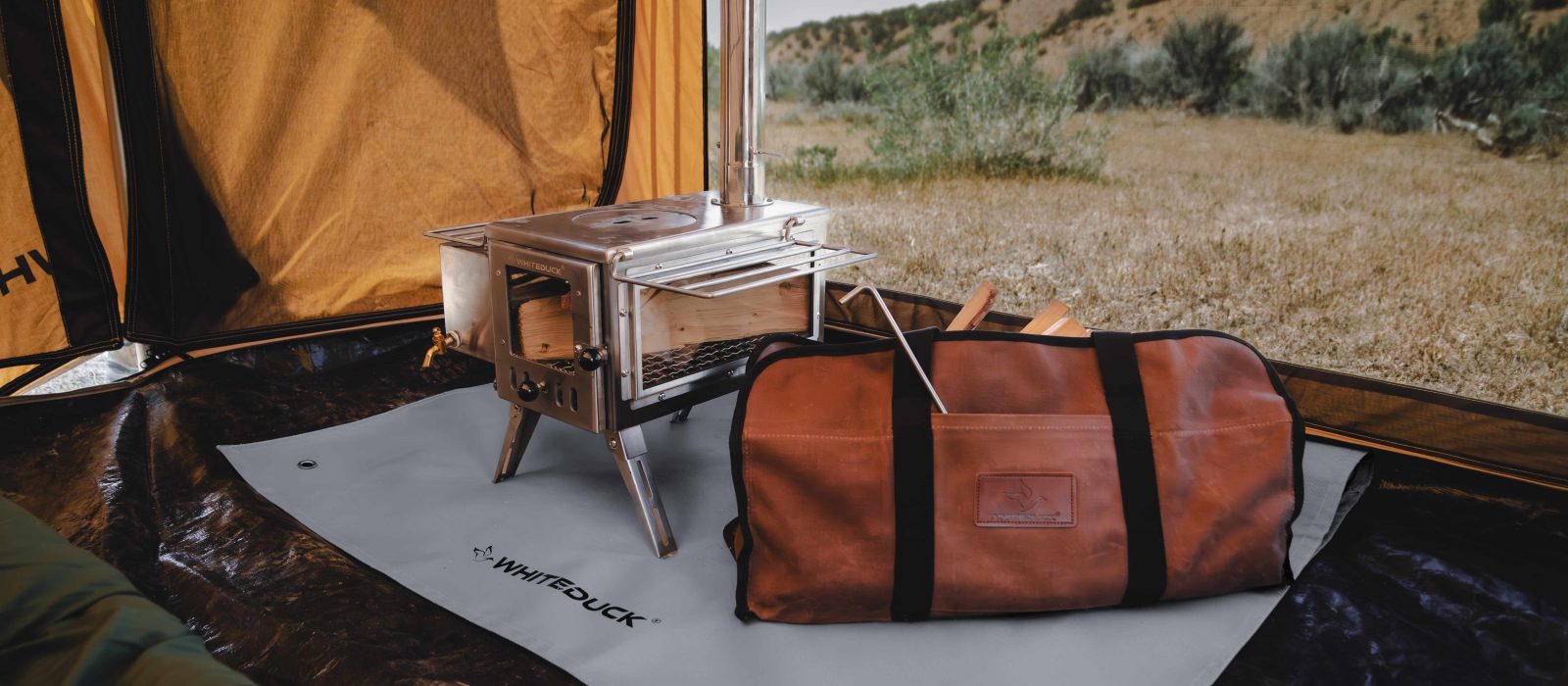
While a wall tent itself can be relatively warm, there certainly are circumstances where a little more heat is necessary to be comfortable. For this, a tent stove is recommended. White Duck Outdoors has recently released a line of Anchor Tent Stoves that come in 4 different sizes, each intended to heat the requisite square footage of any tent size. These are the best wall tent stoves, and they fit perfectly with their stovepipes, accommodated nicely by the wall tent’s stove jack. These stoves break down into packable parts and fit well into a canvas duffel bag. If they need to be secured to a sled, no problem. They are also light enough to be slung over a shoulder and carried through more difficult terrain. When staying warm isn’t an option, then leaving the tent stove behind isn’t either.
More than a Wall Tent Stove
Having a usable product that will only keep the tent warm is a good idea. But consider the levels of comfort that the right stove can provide, and winter camping will be changed forever. Gear is always getting wet on snow camps. Even though Gore-Tex(r) keeps everything waterproof these days, gear still gets wet on the outside. Gloves, sweaty socks, and beanies all need to be dried. A good tent stove should have a detachable warming rack next to the stove body. Something like this is perfect to dry out the winter gear.
When a good wall tent stove gets percolating, many times a door or window needs to be propped open. This isn’t the worst case in the world, but when it’s time to go to bed, it can be tough to keep a steady and consistent temperature inside a wall tent with a tent stove. Luckily, White Duck Outdoors has thought of everything with the Anchor Tent Stoves. The stoves also come with a damper to control the airflow, which doubles as a thermostat that can be set by feel. Get the fire going and set the damper to keep smoke out and heat in.
These stoves are exactly that: stoves. On top of the round body of the Anchor Tent Stove is a flat cooking surface. Think of it as a flat cooktop on a glass stove at home. Place a pan right on top of the flat cooktop, and the veggies will be sauteed in no time. There are also detachable grills for either side of the cooking surface to cook meat, or whatever is desired, all while keeping the interior of the wall tent at a perfect temperature.
Of Days Gone Past
It seems that at one time, carrying a tent stove along for the trip would have been burdensome or impractical. For some, cramping into structures made of thin, ultralight materials with a small raging gas flame to cook a powdered stew is the best way to winter camp. That’s great! Kudos to those rugged individualists. But this isn’t the only option to stay warm and enjoy the backcountry in the winter months. Playing cards at a pack-down table and sitting on comfortable chairs while baked potatoes cook in a cast-iron stove and steaks sear on a hot grill is also not a bad way to enjoy the cold. The technology in these White Duck Outdoors products reveals a new convenience in some traditional methods.
It is now possible to hike canvas tents into the backcountry. Carrying a stove into the wild isn’t difficult. For car-camping closer to home, replicating the same creature comforts that a brick-and-mortar house provides is also not difficult. The only difficult decision to make is what size of wall tent to get, and then which Anchor Tent Stove fits best. The rest just falls into place.


No Comment! Be the first one.