
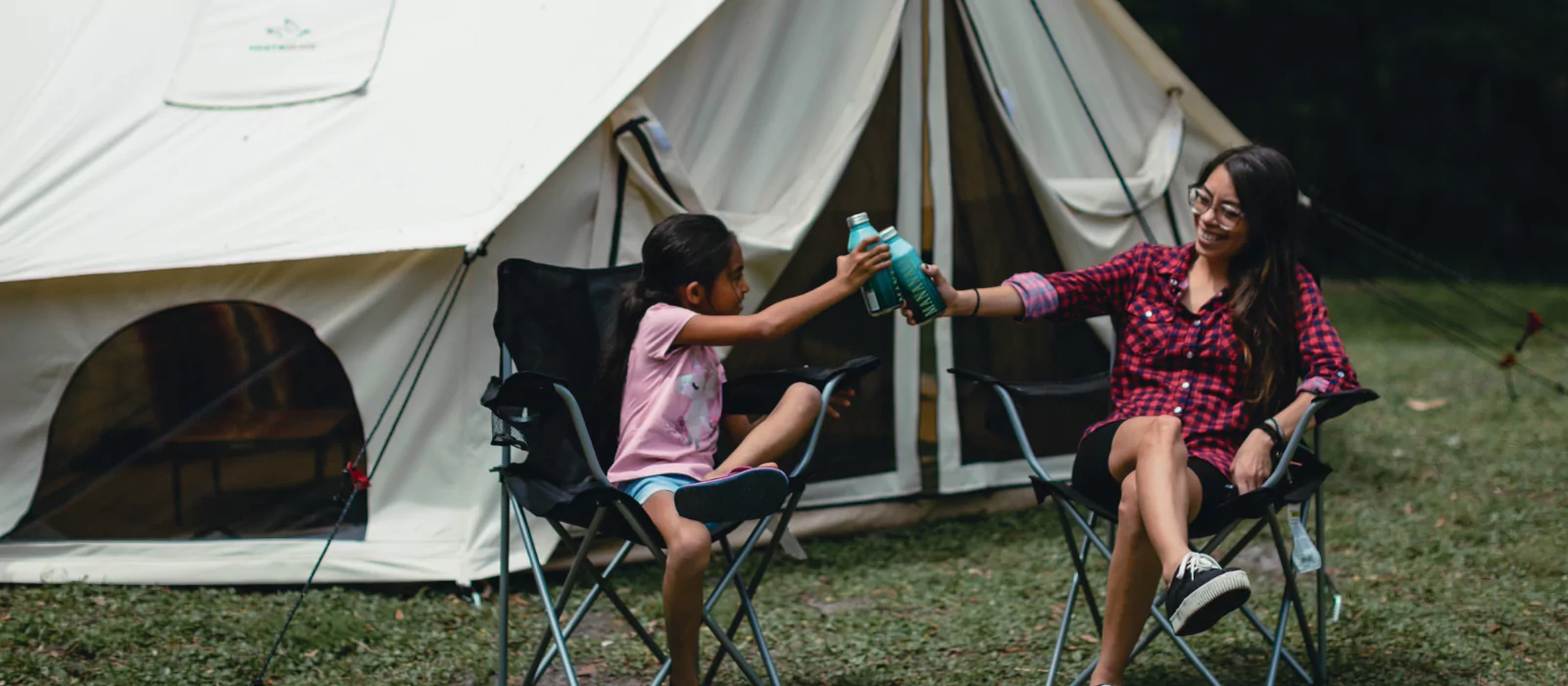
I love sitting around the campfire as the sun dips behind the tall pines. My camping tent catches the evening breeze. Everyone’s laughing about the day’s adventures. This is summer camping at its finest. And this is possible all summer long.
Table Of Contents
But here’s the thing. If someone doesn’t do something as simple as drink enough water, the whole trip can turn into a nightmare. I’ve seen tough outdoors people get knocked flat by not drinking enough water. While staying hydrated during summer camping isn’t rocket science, it’s not as simple as chugging water when you feel thirsty. Without the right approach, even experienced campers can find themselves in trouble.
This guide covers everything you need to know about preventing dehydration outdoors. From figuring out your water needs to setting up cooling stations at camp, these hydration tips for campers will keep you safe all summer long.
Water Math Made Simple
Most people think they drink enough water. But they forget that in hot weather, your body works overtime to stay cool. So you’re losing water faster than you realize. Here’s the reality check. During temperatures above 85 degrees, an active adult can lose 2-3 liters of water per day through sweating. That doesn’t include serious hikes and extreme heat!
To begin, start with one gallon of water per person per day. That covers drinking, cooking, and basic hygiene. Next, for every hour of physical activity in temps above 80 degrees, add another 16-24 ounces. Are you camping above 8,000 feet? Then add another 20% because higher places make you lose water faster.
Also, don’t forget about cooking water. Rice, pasta, and dried meals all need water. Furthermore, washing dishes adds up too. Smart campers bring 1.5 gallons per person per day to cover everything comfortably.
Weather is probably the biggest factor in how much water your body needs. Heat is bad, yes. But we often don’t think about other factors. Unfortunately, humidity makes everything worse because sweat doesn’t evaporate well. Meanwhile, wind tricks you into thinking you’re cooler while actually making you lose more water. Mother Nature is tricky, so check the forecast and adjust accordingly.
Reading Your Body’s Warning Signs
Your body sends clear signals when water levels drop. I have learned to read these signs early and act quickly. As a result, it has saved me from many miserable afternoons recovering after long hikes.
If you’re thirsty, you’re slipping. Thirst is a late warning sign. By the time you feel thirsty, you’re already mildly dehydrated. That’s why experienced campers drink on a schedule. I prefer to set a watch timer for every 15-20 minutes. Then I take a few sips and keep moving. Also, I’ll increase the number of drinks in hotter weather or if I’m moving more.
Check urine color throughout the day. Pale yellow or clear means you’re doing good. However, dark yellow or amber is a bad sign. Not urinating for several hours is a pretty serious red flag. In that instance, find some shade and quit moving for a while as you pound liquids.
Early symptoms of dehydration include headaches, feeling tired, and trouble concentrating. You might feel cranky. Additionally, tasks like setting up your camping tent might seem harder than usual. These subtle signs are easy to dismiss, but they shouldn’t be ignored. Also, watch for signs of heat exhaustion like heavy sweating followed by cold, clammy skin. Muscle cramps, fast weak pulse, and nausea come next. These symptoms require immediate attention and rest in the shade.
Furthermore, pay attention to your camping partners. Sometimes it’s easier to spot dehydration in someone else. If you notice slurred speech, stumbling, or personality changes, get that person some water immediately. Then get them in some shade.
First, Find the Water, Then Treat It
Finding and treating water sources can be necessary on longer trips. Even with careful planning, you might need to refill from natural sources if you’re not near a town. So it is good to know how to do this safely. Here are your options to re-up in the backcountry:
Fast-moving streams and springs generally contain fewer harmful germs than still ponds. However, even crystal-clear mountain streams can still be home to invisible bugs that can cause some serious illnesses.
Always treat water from springs, rivers, and lakes. Boiling is the most reliable method. Bring water to a rolling boil for at least one minute and three minutes if you’re above 6,500 feet elevation.
Water purification tablets are a great lightweight option. Iodine and chlorine dioxide tablets work against most harmful organisms. But follow the directions carefully and allow for the required time before drinking.
Portable water filters are awesome, but they are the most expensive options. Sometimes they can cost hundreds of dollars. Look for filters rated to remove bacteria and protozoa. Some advanced models also eliminate viruses. I invested in one of these with a charcoal filter. Just make sure to clean and maintain the filter often.
UV water sterilizers work quickly against all waterborne pathogens. They’re battery-powered, lightweight, and easy to use. Pack extra batteries though. Also, have a backup purification method if this breaks down.
Always store treated water in clean, covered containers and keep them away from direct sunlight. This will keep it fresh and prevent contamination.
More Than Water: Electrolytes Matter
Water alone isn’t enough for summer camping. Your body also loses essential minerals through sweat that plain water doesn’t replace. Understanding this can keep you out of the dizzy zone and keep you focused on enjoying the outdoors.
Sodium is the most important electrolyte lost through sweating. It helps your body hold onto water and maintains proper fluid balance. Without sodium replacement, drinking large amounts of plain water can actually be dangerous. But that’s for a different blog.
Potassium works with sodium to regulate fluid balance and muscle function. Bananas, oranges, and dried fruits are natural sources that travel well. Muscle cramps are a clear sign of not getting enough potassium. I usually have a banana before every hike or trail run. This prevents cramps and soreness before it happens.
Some electrolyte drinks do provide a convenient mineral replacement. But they often contain a lot of sugar. Read the labels carefully and choose products with natural ingredients. Powder supplements are lightweight and easy to store.
If you’re a DIYer, make your own electrolyte solution using these simple ingredients. Mix 1/4 teaspoon salt, 2 tablespoons sugar, and a splash of lemon juice in 16 ounces of water. This costs less and contains fewer additives than store-bought alternatives.
Creating Your Camp Hydration Station
Setting up a dedicated hydration station at your campsite makes drinking enough water easier for everyone. A well-organized system encourages drinking water and protects backup water from contamination.
Find a shaded location for your station. Direct sunlight heats water containers to a temperature that bacteria love. If natural shade isn’t available, create some using camping tent accessories like canvas tarps. Or set up the station on the north side of your camping tent.
Organize supplies for easy access. Keep drinking water separate from cooking water and use clearly labeled containers. Also, position items everyone uses within easy reach. A simple folding table works well for organizing all the coolers and cups.
Keep all the stored water insulated. Large coolers work for base camp setups and cool water tastes better. It also keeps everyone coming back for more. It’s best to have a large insulated community jug with a spout that everyone can use. Make it someone’s task to refill it every hour.
Consider a gravity-fed system for larger groups. Water bags with tubes allow multiple people to fill bottles simultaneously. These systems work especially well when mounted on trees at convenient heights.
I like to make a Daily Drink Mix. I’ll add flavor options and even the kids start drinking more. I use drink mixes or herb infusions. Mint, cucumber, or citrus fruits add natural flavor without artificial ingredients. I like to make sun tea for everyone while we’re out on adventures. Then let it cool overnight before pouring it over ice. It’s one of my favorite camping treats.
The Right Food Goes a Long Way
What you eat during summer camping significantly impacts your hydration status. Some foods help your body hold onto water while others will drain it. So make smart food choices to avoid any potential issues.
Fruits like watermelon, oranges, and grapes are loaded with water and natural sugars and minerals. Vegetables like cucumbers, tomatoes, and lettuce provide water along with essential nutrients. Veggie wraps for lunch are a great way to sneak in a little extra water.
Avoid foods like salty snacks, processed foods, and alcohol. They each require extra water for the body to process them. No one is saying you can’t have them. Just make sure you have a sip of water after every bite.
For dinner, soups, stews, and other liquid-based meals provide fluids along with nutrition. These work especially well when you’re winding down for the day.
Consider the timing of meals and snacks. Eating large amounts during the hottest parts of the day ends up making the bodywork for digestion and warms up your system. So plan main meals for the cool mornings and mellow evenings.
Plan for Proper Hydration
The worst scenarios while camping usually happen without a plan. Successful summer hydration starts long before you leave home. Proper planning, preparation, and realistic expectations set the stage for safe and enjoyable camping adventures.
Start drinking more water a few days before you head out. This is especially important if you’re traveling from a cooler climate to a hotter location. Well-hydrated bodies deal better with heat stress from the beginning.
Check extended forecasts, historical temperature data, and local conditions before you leave. Heat waves, humidity levels, and elevation will all affect your water needs.
Plan with your group. Discuss how much water each person needs to carry, refill opportunities, and emergency procedures before you take off. Also, make sure everyone has reliable, breathable equipment.
Personally, I know what works for my body and activity level. But I keep tabs on more inexperienced adventurers. Keeping everyone informed of the location, weather, and water needs will help them approach the trip with confidence. That is the best thing you can do to help someone prepare.
The reward for proper planning is the freedom to go crazy in the wild all summer. And after all, isn’t that the goal? Cool morning hikes. Afternoon swims. Evening campfires under starlit skies. Plan ahead so you can focus on the fun instead of worrying about your health and safety.
Stay safe out there, drink plenty of water, and I’ll see you under the summer sun.


No Comment! Be the first one.